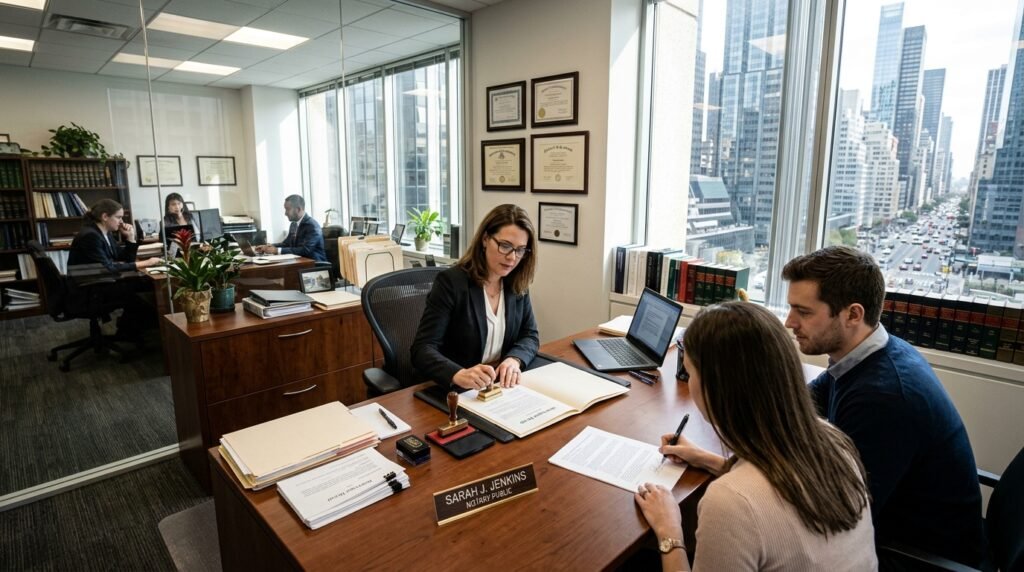
You signed the document. The notary stamped and sealed it. Now you see a misspelled name, a wrong address, or a clause that doesn’t match the deal you agreed to. Can a notarized document be changed at this point?
The signed, sealed original should not be altered by hand, whited out, or digitally edited. Any visible change to a completed notarized document raises immediate questions about authenticity and can trigger fraud or forgery allegations under applicable law. The correct fix runs through a separate legal process: a fresh corrected document, a formal amendment, or a statutory correction instrument, all properly signed and, where required, notarized again.
The fix depends on exactly where the error sits in the document.
Where the Error Lives Determines How You Fix It
Every notarized document has two layers. The instrument is the actual content: the contract terms, the deed’s property description, the power of attorney’s scope. The notarial certificate is the notary’s own statement confirming who appeared, when, what identification they presented, and what type of notarial act was performed (acknowledgment, jurat, oath).
If the error is in the instrument, the notary cannot fix it. Texas Secretary of State guidance is explicit on this point: a notary is not authorized to change, alter, or draft the written instrument. The same principle applies in Florida and every other state. The parties to the document, not the notary, own the content and control any changes.
If the error is in the notarial certificate (wrong date, wrong county, misspelled name in the certificate block, wrong type of act), the notary who performed the act is the one who addresses it. The rules for how they do it, though, vary sharply by state.
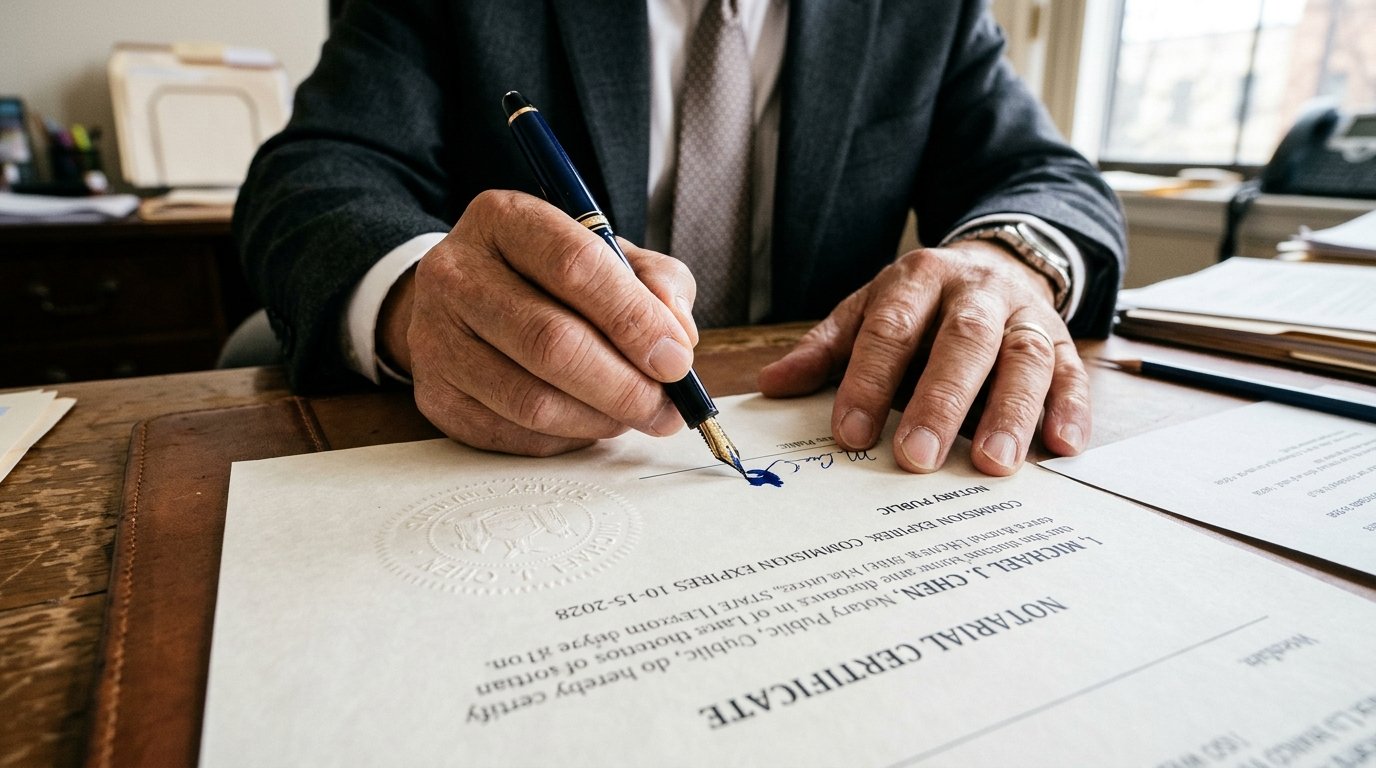
Fixing an Error in the Document Content
When the problem is a typo, a wrong dollar amount, or an incorrect legal description in the instrument itself, the fix depends on the type of document.
For contracts and agreements, the standard route is a written amendment signed by all parties. If the error is significant enough, the parties may choose to execute an entirely new version and have it notarized fresh.
For recorded real estate deeds, most states provide a statutory correction deed process. Texas Property Code Section 5.029 distinguishes nonmaterial corrections (a misspelled middle name that does not change the parties’ identities) from material corrections (a changed property description or different grantee). Material corrections require every original party, or their heirs and successors, to execute the correction instrument. It must then be recorded in each county where the original was filed. The Texas Supreme Court upheld exactly this process in Broadway National Bank v. Yates Energy Corp., confirming that all original parties may correct a material mistake through a statute-governed correction deed.
For powers of attorney, the most practical solution is usually a new document. The principal executes a fresh power of attorney with the correct information and has it properly notarized. Financial institutions may keep relying on the old version until they receive formal notice of the change, so make sure the updated document reaches every bank, title company, or other institution that has the original on file.
For wills, do not write on the signed original. California’s statutory will form expressly warns against adding words or crossing out text. Changes to a will require a formal codicil or a new will, executed with the same formalities as the original.
In every case, you create a new, properly executed instrument rather than editing the signed original.
Fixing an Error in the Notarial Certificate
Certificate correction rules vary dramatically by state, and Florida’s approach catches many people off guard.
Florida Statutes Section 117.107 prohibits a notary from changing a written instrument after any person has signed it and from amending a notarial certificate after the notarization is complete. If you spot a certificate error on a Florida-notarized document (wrong date, wrong county, the notary misspelled your name in the certificate block), the only fix is a new notarization. You appear before the notary again, the notary creates a new certificate with correct information and the current date, and logs a new journal entry.
California follows a similar approach. The 2026 California Notary Public Handbook states that a completed notarial act cannot be corrected. Any discovered error requires a brand-new notarization.
Other states allow limited certificate corrections without redoing the entire act.
| State | Certificate Correction Rule |
|---|---|
| Florida | No amendment allowed after completion; new notarization required |
| California | Completed act cannot be corrected; new notarization required |
| Texas | Notary may correct certificate to reflect proper facts (e.g., correct county) |
| Colorado | Notary may line through the error, write the correction, initial, and date it |
Sources: Texas Secretary of State; Colorado Secretary of State FAQ.
If you are in Florida and discover a certificate error, you will need to meet with a notary again. For many people in Orange, Seminole, Osceola, or Brevard counties, the fastest path is having a mobile notary come to them rather than trying to coordinate office visits and business hours.
The Real Consequences of Unauthorized Changes
Altering a notarized document without following the proper process is treated as forgery, fraud, or professional misconduct, depending on who made the change and what they changed. The cases are not hypothetical.
In 2024, Wisconsin attorney Kevin W. Davidson prepared and personally notarized two quitclaim deeds. He later changed one deed’s grantor from his client to the client’s LLC and removed parcel information for an additional property, then filed the modified version without telling the client. In December 2025, the Wisconsin Supreme Court publicly reprimanded Davidson for dishonesty and failure to consult the client about accomplishing the client’s objectives.
The stakes can be much higher. Federal prosecutors alleged that Lisa Jeanine Findley fabricated loan documents, forged signatures (including a Florida notary’s), and filed a false deed of trust to claim Elvis Presley’s Graceland estate as collateral for a fictitious $3.8 million loan. Findley pleaded guilty to mail fraud and received 57 months in federal prison in September 2025.
And in Ohio, an appellate court invalidated a quitclaim deed and quieted title after the notary testified that the notarial information was not in his handwriting and the trial court found the named signer had never actually signed the deed.
Notarization creates a snapshot of who signed, when, and under what circumstances. Any change made after that snapshot, without documented authorization and a proper legal instrument, breaks the chain of trust the notarization was designed to create. That broken chain can void the document, trigger criminal liability, or both.
What Digital Notarization Changes (and What It Doesn’t)
Electronic and remote online notarization (RON) platforms add a layer of tamper detection that paper documents lack. A digitally sealed PDF uses a cryptographic hash: if anyone modifies even a single character in the file after signing, the hash changes and the digital signature shows as invalid.
This makes unauthorized edits easier to catch, but the document is still not literally unchangeable. Someone can print the PDF, alter the printed copy, and try to pass it off as the original. And a digital seal does not grant legal authority to amend the content. A valid amendment still requires the same formalities: a new instrument, the right signatures, and fresh notarization when required.
As of 2026, 47 states and Washington, D.C., have laws allowing remote e-notarization. Florida has had remote notarization since 2020. The technology strengthens the audit trail, but the rules about who can change what, and how, remain the same.
Practical Steps When You Find an Error
If you have a notarized document with an error, the fastest resolution follows a simple sequence. For detailed guidance on correcting different types of errors, see our complete guide on how to correct a notarized document.
Identify where the error is. Is it in the document content (a wrong name, address, amount, or legal description) or in the notarial certificate (wrong date, wrong county, wrong notarial act type)?
If the error is in the document content, contact the person or company that prepared the document. An attorney, title company, or document preparation service can create a corrected version or a formal amendment. Once the corrected document is ready, all required parties sign it and get it notarized.
If the error is in the notarial certificate, contact the notary who performed the original act. In Florida, you will need a completely new notarization. In states like Colorado or Texas, the notary may be able to make a limited correction to the certificate following state-specific procedures.
In either case, do not mark up or write on the signed original. Keep it intact. The original, even with its error, may need to be referenced or produced later if any question arises about what was initially signed.
If you need a fresh notarization in the Orlando area, we work in Orange, Seminole, Osceola, and Brevard counties and come to wherever you are: your home, your office, a hospital, or a coffee shop. We work in English, Spanish, and Portuguese. Call or text us at (689) 285-5579 to check available time slots. We can usually meet you the same day or next day.
Frequently Asked Questions
Can I use white-out or cross out text on a notarized document?
No. Any visible alteration to a signed, notarized document compromises its integrity and can cause the receiving party (bank, court, title company, government agency) to reject it outright. The proper fix is a new corrected version, formally executed and notarized again.
Does the notary have to be the same person who did the original notarization?
For document content corrections, any commissioned notary can notarize the new or amended version. For certificate corrections in states that allow them, the original notary typically makes the fix because it relates to their own notarial act. In Florida, since the state requires a new notarization rather than a certificate amendment, any Florida-commissioned notary can handle it. If you are wondering whether you can notarize a document twice, the answer depends on these same rules.
How much does it cost to get a document re-notarized?
Florida law sets the maximum notary fee at $10 for a standard notarial act and $25 for a remote online notarization. Mobile notary services typically charge a travel fee on top of the statutory fee. The total usually costs far less than the legal consequences of trying to fix the document yourself with a pen.
Can I change a power of attorney after it has been notarized?
The principal (the person granting the power) can revoke the existing power of attorney and execute a new one with the correct terms. The new document needs to be properly notarized, and every institution that received the original should be notified of the change so they stop relying on the outdated version.
Does an apostille prevent changes to a document?
An apostille certifies the origin and authenticity of a public document’s signature or seal under the Hague Convention. It does not verify the document’s contents or prevent physical alteration. If you need to correct a document that already has an apostille, correct the underlying document first, then obtain a new apostille for the corrected version.
What if someone else changed my notarized document without my knowledge?
Preserve every version of the document you have. Contact the other parties and, if the alteration affects a recorded instrument like a deed, notify the county recorder’s office. Unauthorized alteration of a notarized document may constitute forgery or fraud. You may want to consult an attorney about your options.