Somewhere between signing the purchase agreement and sitting down at the closing table, most buyers start wondering about the notary. There’s usually one involved, but nobody explained why or what they actually do.
Let’s clear it up. This article answers that question, walks through which documents actually require notarization, and covers a few situations buyers run into that most closing guides skip over entirely.
You may also like: How essential is a notary for mobile home documents?
Do you need a notary to buy a house?

Yes, in virtually all cases. Real estate closings involve legally binding documents that transfer property ownership and establish significant financial obligations.
In Florida, the law requires that deeds be notarized before they can be recorded with the county clerk. Mortgage documents require notarization before a lender will fund the loan. Several other documents that routinely appear at the closing table carry the same requirement.
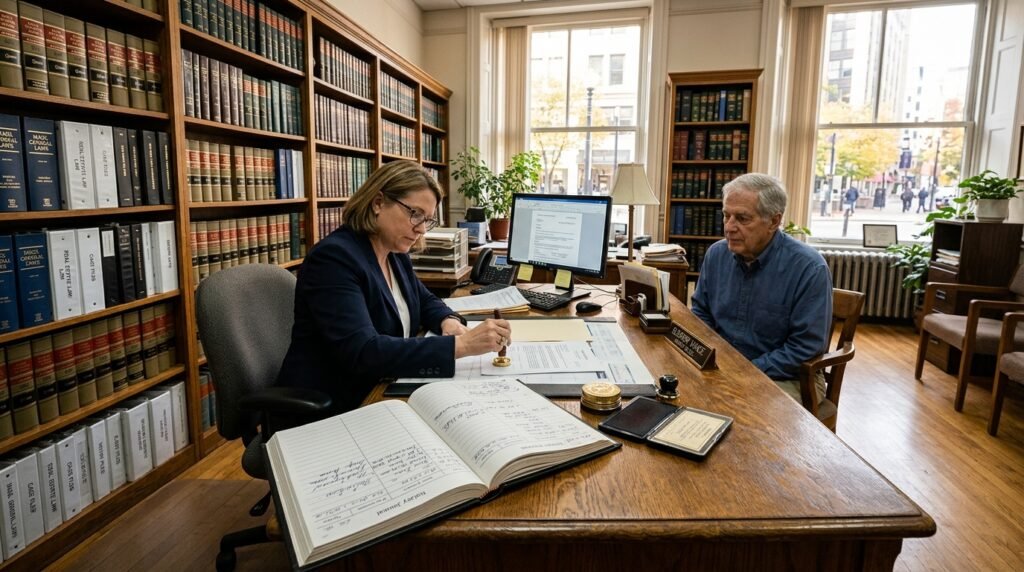
The notary’s role in this process is specific. They verify the identity of each signer, witness the signatures, and apply their seal to create an authenticated record. They are not reviewing the legal content of your documents or advising you on what you are signing – that is the job of your attorney or lender.
But their presence is not optional, and without a properly executed notarization, a document can be challenged, rejected by the county recorder, or render the transaction incomplete.
Whether the notary at your closing is provided by the title company, sent by the lender, or someone you bring yourself, they will be there.
Which documents at closing actually require notarization?
More than most buyers realize. Here is a look at the ones that matter most.
The deed is the document that actually transfers ownership of the property from the seller to the buyer. In Florida, a deed must be notarized (with two witnesses) to be valid and must be recorded with the county to be legally effective. This is a requirement; there’s no workaround.
The mortgage or deed of trust is the document that gives the lender a security interest in the property as collateral for the loan. It must be notarized before the lender will release funds. No notarization, no funding.
The promissory note is the borrower’s written promise to repay the loan under the terms agreed upon with the lender. While it requires a signature, whether it requires notarization depends on the lender and the loan type – some require it, while others do not.
The affidavit of title is a sworn statement, typically made by the seller, confirming that they own the property free of undisclosed claims or liens. Because it is a sworn oath, a notary must be present to administer it and authenticate the signature.
Beyond those core documents, Florida closings commonly include gap affidavits, owner’s affidavits, and various title-related certifications.
Most of these require notarization as well. Your closing package may look large, but a significant portion of the signing is standard and moves quickly once you are sitting down.
Who provides the notary at closing?

This is something buyers rarely think to ask, and it is worth knowing the answer before closing day arrives.
Title companies typically have a notary on staff or arrange for one as part of the closing process. If your closing is handled through a title company, a notary will be there. Lenders who handle closings remotely often send a certified notary signing agent to the buyer’s location.
In Florida, closings sometimes involve a real estate attorney, and attorneys handling closings are frequently also notaries. In those situations, the attorney manages both the legal and notarial aspects of the closing.
What many buyers do not realize is that they are not required to use whoever the title company or lender provides. If you have worked with a mobile notary before and prefer the familiarity, you can bring your own. Confirm this with your title company or lender ahead of time, but it is not uncommon.
What if you cannot be at the closing in person?

This comes up more often than it used to. Out-of-state buyers, military families, investors closing on multiple properties, and people in the middle of a relocation all face the same challenge: they need to sign closing documents, but they cannot be in the room.
There are two main options.
A power of attorney for real estate allows a trusted person to sign on your behalf at the closing table. The POA itself must be notarized before it can be used, ideally well before closing day, so there is time to address any issues. A mobile notary can come to wherever you are to execute the POA.
Remote online notarization, or RON, is the other option. Florida law permits RON for real estate documents, meaning a notary can witness your signature via a live, recorded video session rather than in person. The Florida Department of State oversees this process.
Not every lender or title company is set up for a fully remote closing, so ask early in the process whether RON is available for your transaction.
Do you need a notary before closing day?

Sometimes, yes.
If you are executing a power of attorney so someone else can sign at closing, that needs to be notarized before the closing date. The sooner you handle it, the better, as a defective or missing POA on closing day can delay the entire transaction.
Sellers are sometimes asked to execute affidavits or title-related documents days before the actual closing. Loan modifications and lender-required certifications occasionally surface in the days leading up to closing and may require notarized signatures outside of the formal appointment.
For convenience, a mobile notary can handle any of these without requiring you to take time off work or rearrange your schedule!
FAQ

Is a notary the same as a closing attorney in Florida? No. A notary verifies identity and witnesses signatures. A closing attorney manages the legal aspects of the transaction, prepares or reviews documents, and handles the transfer of funds. Some attorneys are also notaries, but the roles are distinct.
Can a notary catch errors in my closing documents? A notary is not reviewing your documents for accuracy or legal sufficiency, but good professionals will review the package to catch missing pages, mismatched names, or incorrect dates that could otherwise stall your closing.
If you have concerns about the content of your closing documents, raise them with your lender, title company, or attorney before signing.
What happens if a closing document was not properly notarized? An improperly notarized document may be rejected by the county recorder, challenged by a lender, or deemed unenforceable. In most cases, the fix involves re-executing the document correctly, but this can delay the closing or create complications with the transaction.
How long does a closing appointment usually take? Most residential closings take around an hour when everyone is prepared and the documents are in order. Cash purchases tend to be faster; financed purchases involve a larger document package.
Do both the buyer and seller need to sign in front of the same notary? Not necessarily. Buyers and sellers may sign separately, sometimes at different locations and times, with the documents brought together by the title company or attorney. A mobile notary can accommodate either party at their preferred location.
So – do you need a notary to buy a house?
The answer is yes. Understanding the notary’s role in a home purchase will not make the stack of documents feel any smaller, but it removes one layer of uncertainty from a process that already has plenty of moving parts.
The notary is there to make sure the documents are executed correctly so the transaction holds up legally – and that benefits everyone at the table!
If you need a notary at any point in your home purchase, Mobile Notary Orlando is available 24/7 throughout Orange, Seminole, Brevard, and Osceola counties.
Whether it is a pre-closing power of attorney, a document that needs re-signing, or support at the closing table itself, reach out and we will be there for you.