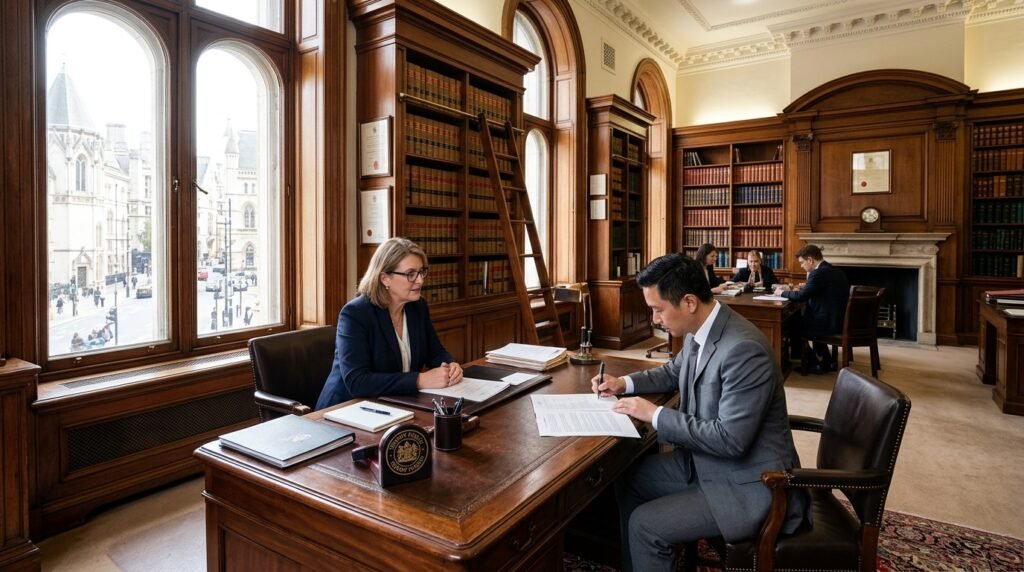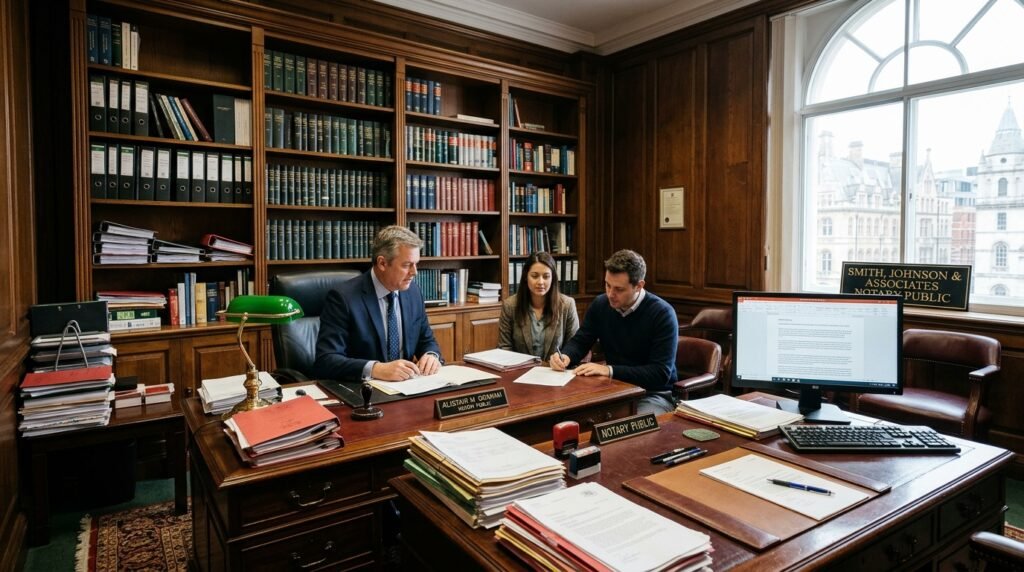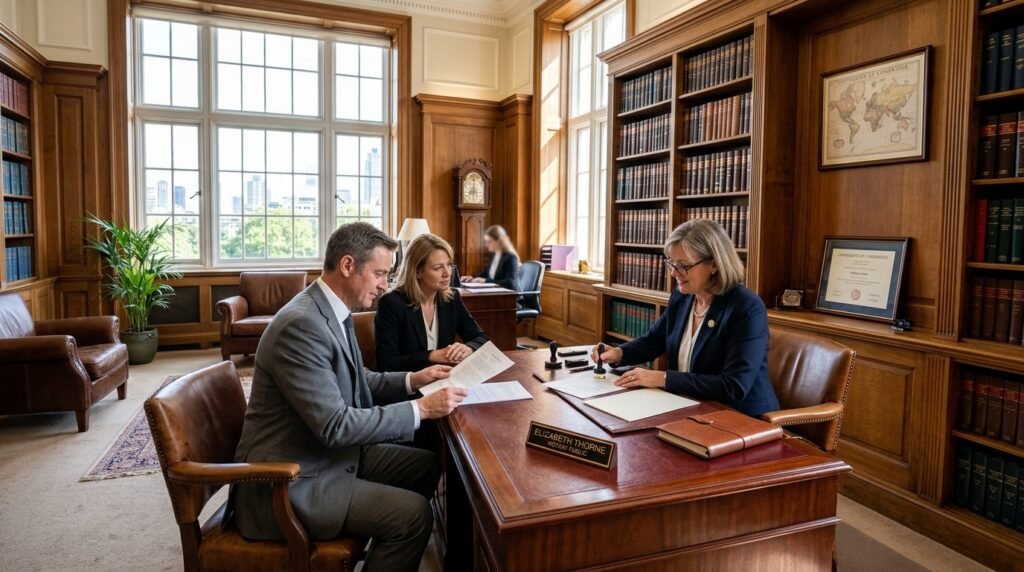
You have a document that needs to be notarized. Maybe a power of attorney for a parent overseas, an affidavit for court, or a deed for a property sale. The problem: there is no notarial language on the page. Or there is, but you are not sure it is the right kind. Either way, something called “notarized wording” is standing between you and a finished document.
Here is the core issue. Notarized wording is not decoration. It is the notarial certificate: a specific block of text that records what the notary public actually did, when, where, and for whom. Get it wrong, and the county recorder rejects the deed. The court sends back the affidavit. The lender delays the closing. One wrong-certificate rejection described by the National Notary Association cost a notary $20,000 in legal fees from a $25,000 errors-and-omissions policy.
This article walks through how notarized wording works, the two most common certificate types, what Florida requires, and how to avoid the mistakes that cause rejections. We are not attorneys and cannot give legal advice, but we handle notarizations across Central Florida every day, and we can explain the process in plain terms.
What “Notarized Wording” Actually Means
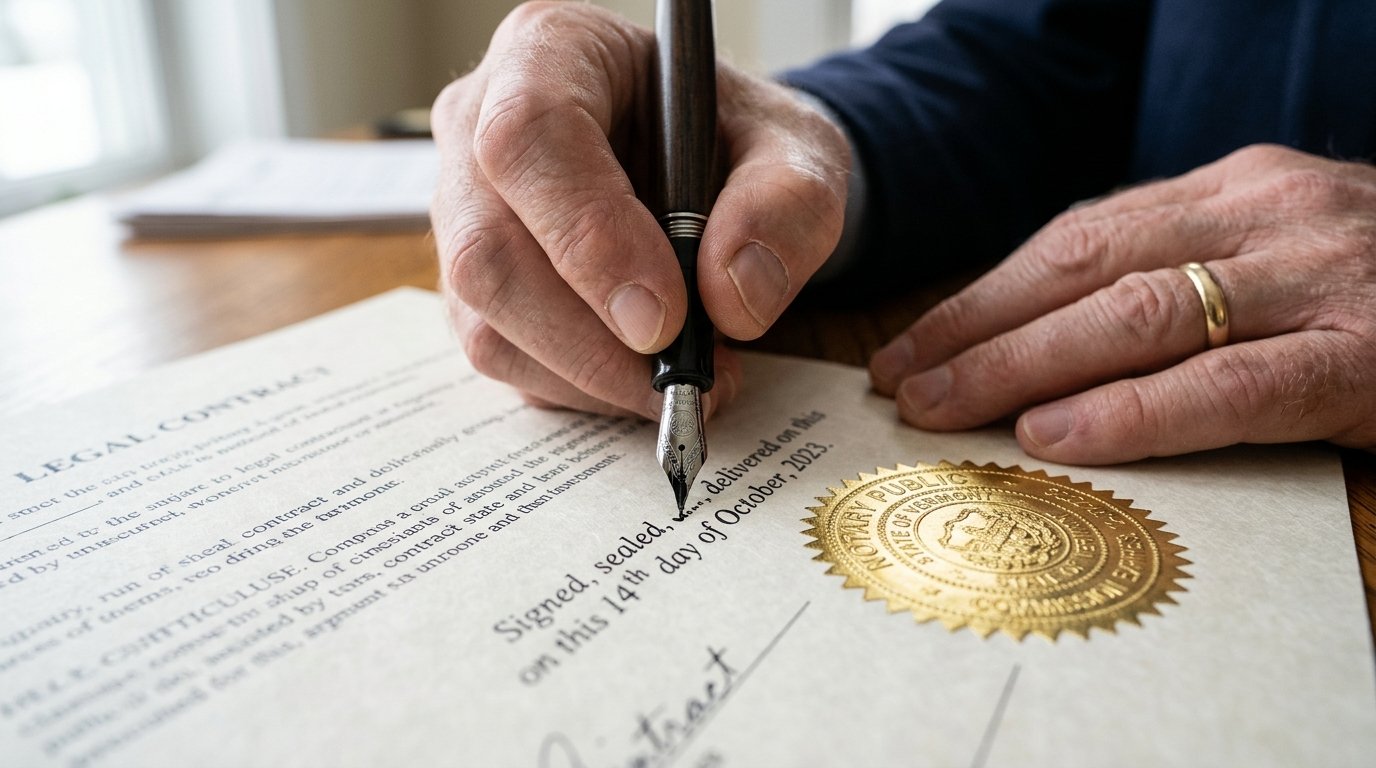
A notarized document has two separate parts. The first is the document itself: your letter, contract, affidavit, or power of attorney. You (or your attorney) write that part. The second part is the notarial certificate. That is the “notarized wording.” To see how these elements come together in practice, review this example of a notarized document.
The certificate is a written record of the official act the notary performed. It typically includes:
- The state and county where the notarization happened
- The date of the act
- The name of the person who appeared
- Which act was performed (acknowledgment, jurat, signature witnessing, etc.)
- How the signer was identified
- The notary’s signature, printed name, commission expiration, and seal
A stamp and signature alone do not constitute a valid notarial certificate. Pennsylvania’s Department of State puts it directly: “A notary public may not simply sign and stamp a document.” Florida’s published sample certificates carry the same principle. Every notarial act needs corresponding language that describes what happened.
One more distinction worth understanding early: the notarial certificate does not verify that your document is true. California’s 2026 Notary Public Handbook requires a notice on every certificate stating that the notary “verifies only the identity of the individual who signed the document … and not the truthfulness, accuracy, or validity of that document.” The notary confirms identity and witnesses the act. The content of your document is your responsibility.
Acknowledgment vs. Jurat: The Choice That Shapes the Wording
Most notarized documents use one of two certificate types: an acknowledgment or a jurat (also called a verification on oath or affirmation). They record different acts. Using the wrong one can invalidate the notarization.
Acknowledgment
An acknowledgment means the signer appears before the notary, is identified, and acknowledges that they signed the document voluntarily. The signer does not need to sign in front of the notary. They can sign beforehand and then acknowledge that yes, that is their signature and they intended to sign.
Acknowledgments are common in real estate: deeds, mortgages, and many closing documents require them.
The certificate language typically reads something like:
State of __________
County of __________This record was acknowledged before me on [date] by [name of signer].
[Notary signature, title, commission expiration, seal]
Jurat
A jurat means the signer appears before the notary, signs the document in the notary’s presence, and takes an oath or affirmation that the contents are true. Both elements are required: signing before the notary, and swearing or affirming.
Jurats appear on affidavits, sworn statements, and certain court filings.
The certificate language typically reads something like:
State of __________
County of __________Signed and sworn to (or affirmed) before me on [date] by [name of signer].
[Notary signature, title, commission expiration, seal]
Why the difference matters
The words “sworn to before me” mean the notary administered an oath or affirmation. If the notary writes “sworn to” but never actually asked the signer to swear or affirm, the certificate is false. If a document requires a jurat but the notary performs an acknowledgment (or vice versa), the receiving institution can reject it.
The simplest rule: check what the receiving party requires. If a title company sends closing documents with acknowledgment certificates pre-printed, use an acknowledgment. If a court filing says “verification” or “affidavit,” it almost certainly needs a jurat. When the instructions are unclear, the NNA advises asking the receiving agency or an attorney, not the notary, to make that choice.
Florida’s Certificate Wording
Since we serve Orange, Seminole, Osceola, and Brevard counties, Florida’s requirements are the ones we work with daily. The Florida Division of Corporations publishes sample notarial certificates that distinguish between physical presence and online notarization, and between individual and representative capacities.
A few details specific to Florida certificates:
- Identification method. Florida’s sample forms include a field for how the signer was identified: personally known to the notary or identified by a specific type of identification. This is not optional filler text.
- Physical vs. online appearance. If the notarization happens in person, the certificate says “who personally appeared before me.” If it is a remote online notarization (RON), the wording changes to reflect the communication technology used.
- Oath language for jurats. Florida’s jurat certificate includes “Sworn to (or affirmed) and subscribed before me,” followed by the identification basis. If the notary does not actually administer the oath, the certificate should not include that language.
Florida law gives notaries six basic duties: administering oaths or affirmations, taking acknowledgments, attesting to photocopies of certain documents, solemnizing marriage, verifying vehicle identification numbers, and certifying the contents of a safe deposit box. The certificate language corresponds to whichever duty is being performed.
Representative Capacity: Signing for Someone Else
Sometimes the person appearing before the notary is not signing for themselves. They are signing as an attorney-in-fact under a power of attorney, as a corporate officer, as a trustee, or as a guardian. This changes the wording.
A representative-capacity acknowledgment identifies three things: the person who appeared, the type of authority they hold, and the entity or individual they represent. Texas publishes separate sample forms for corporations, partnerships, LLCs, attorneys-in-fact, and other representatives, each with slightly different language.
For example, instead of “acknowledged before me by John Smith,” a representative acknowledgment might read “acknowledged before me by John Smith as attorney-in-fact for Jane Smith.” The distinction is not cosmetic. If a deed is recorded with the signer’s personal-capacity acknowledgment when they actually signed under a power of attorney, the county recorder or title company can flag the discrepancy.
This is a common scenario in our work. A family member holds a power of attorney for someone who is overseas or in the hospital, and they need to sign and notarize documents on that person’s behalf. The certificate must reflect the representative capacity accurately.
When the Document Has No Wording at All
It happens regularly. Someone hands a notary a letter, a contract, or a statement with no notarial certificate on the page. Now what?
In most states, including Florida, the notary can attach a separate certificate (sometimes called a “loose certificate”) to the document. This is a standalone page with the full notarial wording, stapled or otherwise affixed to the original document. The separate certificate must identify the document it relates to: the type of document, its date, the number of pages, and the signer’s name.
The key question remains the same: which act does the receiving party need? An acknowledgment or a jurat? A notary can explain the options, but the signer is the one who selects the act. If you are unsure, call the institution that will receive the document and ask what type of notarization they require.
A document label can be misleading. Something titled “affidavit” almost always needs a jurat. But a document titled “agreement” or “letter” could go either way depending on the recipient’s requirements. For instance, a commercial service agreement typically requires an acknowledgment rather than a jurat. The title alone is not a complete instruction.
Common Mistakes That Get Documents Rejected
From what we see in the field and what official sources document, the same errors keep recurring:
Stamp and signature with no certificate language. The notary signs, stamps, and hands the document back. No state, no county, no date, no description of the act. This is the most basic error, and it makes the notarization incomplete.
Wrong act for the document. An acknowledgment certificate on a sworn affidavit, or jurat language on a deed that requires an acknowledgment. The recording office or court rejects it, and the signer has to start over.
Missing identification method. Florida’s certificates include a field for how the signer was identified. Leaving it blank, or checking “personally known” when the notary has never met the signer, creates a problem.
“Sworn to” without an oath. If the certificate says the signer swore or affirmed, the notary must have actually administered the oath or affirmation. Skipping this step while including the language is not a shortcut. It is a false certificate.
Incomplete representative-capacity language. The signer signs as an attorney-in-fact, but the certificate only names them individually. The receiving party sees a mismatch and sends it back.
Using another state’s wording. A certificate form from Texas will not necessarily satisfy Florida’s requirements, and vice versa. State-specific forms exist for a reason. Each state’s secretary of state or equivalent publishes its own sample certificates.
Notarized Wording for Documents Going Abroad
If your document is headed to another country, notarized wording is only one layer of the process. Most countries that are part of the 1961 Hague Convention require an apostille, which is a separate certification issued by the Secretary of State. The apostille authenticates the notary’s commission, not the document’s content.
The sequence matters:
- The document is prepared.
- The document is notarized with the correct certificate wording.
- The notarized document is sent to the Secretary of State for an apostille.
The U.S. Department of State specifically warns against notarizing original federal documents (like a birth certificate from abroad or a federal court order), because doing so can actually invalidate them for the apostille process. State-issued documents follow a different path.
In Florida, apostilles are issued by the Secretary of State’s office in Tallahassee. If you need an apostille for a document in the Orlando area, the notarization step needs to happen first with correct Florida wording, and then the apostille application follows. Turnaround varies: same day if someone walks into the Tallahassee office, up to 5 days with a courier option, and 7 to 10 business days by mail.
Who Picks the Wording? Roles and Boundaries
This is where people sometimes get confused, so let us be direct.
The document preparer (you, your attorney, or the institution providing the form) is responsible for the body of the document and for specifying what type of notarial act is needed.
The receiving institution (the court, recorder’s office, title company, foreign consulate) determines which act and certificate they will accept.
The notary public performs the requested act, completes the certificate accurately, and applies the seal. A notary who is not also an attorney generally cannot choose the certificate type for you or advise you on which act your document requires. We can explain the difference between an acknowledgment and a jurat. We cannot tell you which one your document needs. That is a question for the receiving party or your attorney.
This boundary exists for a good reason. Choosing the wrong notarial act can have legal consequences, and that choice falls within the scope of legal advice.
Frequently Asked Questions
Can I write my own notarized letter and bring it to the notary?
Yes. You write the letter (the substantive content), and the notary adds the notarial certificate. Do not attempt to write the certificate yourself. Check with the recipient whether they need an acknowledgment or a jurat, then bring the letter to the notary appointment with that information.
What if my document already has the wrong certificate wording?
The notary cannot simply cross it out and use different wording on the same certificate. In most cases, a new notarization with the correct certificate type is needed. If the original certificate contains a minor factual error (a misspelled name, wrong date), correction procedures exist, but they apply to the certificate’s details, not to changing the type of act.
Does every state use the same notarized wording?
No. Each state publishes its own sample certificates. Florida, California, Texas, Pennsylvania, and New York all have variations in required language, required fields, and formatting. Always use the forms published by the state where the notarization is performed.
Is a notarized document the same as an apostille?
No. Notarization is one step. An apostille is a separate certification from the Secretary of State that authenticates the notary’s commission for use in countries that participate in the Hague Convention. You typically need the notarization first, then the apostille.
Can the notary come to me if I cannot travel?
Yes. A mobile notary travels to your location: your home, office, hospital, or nursing home. The notarial act and certificate wording are the same whether the notarization happens in an office or at your kitchen table. The location just needs to be recorded accurately in the certificate.
How long does a notarization appointment take?
A straightforward notarization (one signer, one or two documents) typically takes 15 to 20 minutes. A signing with multiple documents, such as a power of attorney or a loan closing, can take 20 to 45 minutes depending on the number of pages.
Get the Wording Right the First Time
The fastest path to a properly notarized document: know which act the receiving party requires, bring valid identification, and work with a notary who completes the certificate correctly. That is the entire formula.
If you are in Orange, Seminole, Osceola, or Brevard County and need a document notarized, we can meet you wherever is convenient: your home, your office, a hospital, or a coffee shop. We work in English, Spanish, and Portuguese, and we are available 7 days a week. Call or text us at (689) 285-5579 to check available time slots, or visit mobilenotaryorlandofl.com to learn more about how we work.