
Most people picture a notary public sitting behind a desk at a bank or a shipping store. You gather your documents, drive to their location, wait in line, and hope you arrive before they close. It is a necessary errand, but often an inconvenient one.
This rigid model doesn’t always fit into a busy schedule or accommodate those who cannot travel. Thankfully, there is a modern and flexible alternative that brings the service directly to you: a professional known as a mobile notary public.
Throughout this article, we will define their role, explain the main differences between mobile notaries and your traditional notary public, and outline when hiring one is the best way to go.
Defining the role of a mobile notary public
A mobile notary public is a state-commissioned official who travels to the client’s location to perform notarial acts.
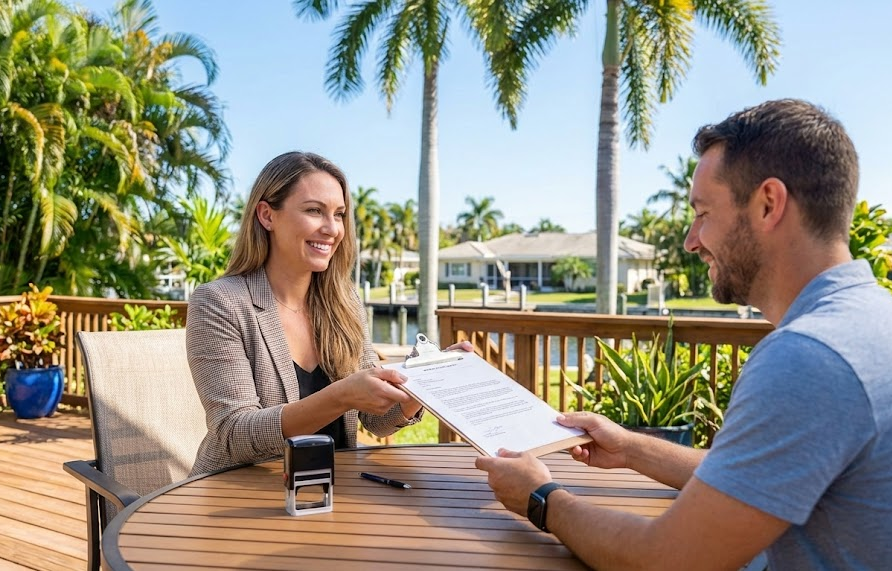
Unlike a stationary notary who waits for clients to come to an office, a mobile notary operates on the road. They bring their official seal, journal, and expertise to homes, offices, hospitals, coffee shops, or even a park bench if that’s what works and you’re in a hurry.
Contrary to what some think, they are not “lesser” notaries. In fact, they hold the same commission from the state government, so their core duties are the same. See below:
- They verify the identity of signers using government-issued identification.
- They witness signatures to ensure they are voluntary and not made under duress.
- They administer oaths and affirmations when required by the document.
- They adhere to the same strict state laws and regulations regarding notarial acts.
- They cannot provide legal advice or draft documents unless they are also an attorney.
- They are strictly impartial witnesses who have mobilized their service to prioritize accessibility and efficiency for the client.
- And, as reasonable as it can be, they also attempt to deter fraud and ensure the integrity of the transaction.
Comparing mobile notaries and traditional notaries

Understanding the value of a mobile notary requires a direct comparison with the traditional model. As you already know, both officials perform the same legal act, but their respective clients’ experience will differ a lot.
Here’s how traditional notarization usually goes:
- Locations are fixed: you must travel to a bank, law firm, insurance office, or shipping center.
- Availability is rigid: services are typically available only during standard business hours (e.g., 9:00 AM to 5:00 PM, Monday through Friday).
- Costs are generally lower; however, your mileage may vary, as banks may offer free services to customers and shipping stores may charge a regulated per-signature fee.
- Their work environment is public and often busy. You may have to wait in lines or deal with a lack of privacy for more sensitive concerns.
Now, let’s compare it to the average mobile notarization experience:
- Location is flexible: the notary meets you at a location of your choice, whether that is your kitchen table, a corporate boardroom, or a medical facility.
- Availability is greatly expanded: most mobile notaries operate outside standard business hours, offering appointments on evenings, weekends, and even holidays. Again, your mileage may vary.
- As you might expect, costs are higher: in addition to the state-regulated fee for the notarization itself, mobile notaries charge a travel fee to cover their time and mileage.
- The notarization environment is controlled and as private as you want to make it. You choose the setting, allowing for a more focused and confidential signing process.
It’s a classic trade-off situation: the traditional route saves money but costs time and effort. The mobile route costs more but saves time and provides logistical solutions that a fixed office cannot.
When is it best to hire a mobile notary public?

So, when does it really make sense to call a mobile notary public? Here are some real-life situations where they’re a lifesaver:
Busy professionals
For executives and business owners, time is a quantifiable asset – no wonder these are the guys who usually exclaim time is money. Leaving the office, driving to a bank, and waiting for a notary disrupts the workday, so hiring a mobile notary public lets you minimize time off work.
For example, they may show up at your office during a break, you sign what you need, and it’s done.
Healthcare and senior facilities
For folks in these settings, mobile notarization is usually the one practical option there is. Seniors in nursing homes, individuals in hospitals, and those recovering somewhere might need to sign critical documents like medical powers of attorney or advanced healthcare directives.
Generally speaking, these patients cannot or have great difficulty traveling to meet a traditional notary public. So a mobile notary public comes to their bedside, verifies everything with calm and respect, and gets those time-sensitive papers handled without adding stress to an already tough situation.

Real estate transactions
Real estate closings are another huge one.
Buying or selling a home generates piles of paperwork. Title companies and lenders love hiring the services of mobile notaries (often referred to as “notary signing agents” when specialized in loans) to handle it.
Instead of dragging everyone to an office during business hours, the notary meets buyers and sellers at home, work, or another neutral spot. It keeps the deal moving with minimal disruptions and reduces last-minute issues.
Multiple signers
Got multiple people who need to sign the same document but live or work in different areas? Coordinating everyone at one traditional notary spot is a logistical nightmare. A mobile notary public can meet them at a central location – or even visit each person – making sure signatures happen correctly and together when required.
Sensitive legal matters
And, for anything personal or sensitive (wills, trusts, divorce papers, custody agreements, and so on), privacy matters. Signing in a busy bank lobby or store counter might feel too exposed.
With mobile notarization services, you get to control the environment and handle these matters somewhere private, ensuring discretion and comfort for all parties.

How does mobile notarization work?
Engaging a mobile notary is a simple process designed for efficiency, and we distilled it further below:
- Locate: you search for a mobile notary in your local area. You may search online, check reviews, ask your attorney, or even get friends to recommend a qualified professional.
- Schedule: you contact the notary to arrange an appointment. You will specify the location, time, type of document, and special needs if required.
- Confirm fees: you agree on the cost, which will include the statutory fee for the notarization and a separate travel fee based on distance or time.
- Prepare: you ensure the document is complete (but unsigned) and that all signers have valid government ID.
- Meet: the notary arrives, verifies identities, witnesses the signing, and completes the notarization.
How Mobile Notary Orlando can help you out with your legal matters
In the end, a mobile notary public isn’t reinventing notarization; it’s making it fit the fast-paced modern life. The legal power stays the same, but the delivery becomes human-centered – it’s convenient, flexible, and respectful of your time/circumstances.
Whether you’re closing on a dream home, sorting out end-of-life wishes for a loved one, or just trying to squeeze one more thing into a packed week, a mobile notary public brings the service to you so you can keep living your life with minimal disruptions.

If you’re in the Central Florida area and need that kind of help, we at Mobile Notary Orlando are standing by to bring professional notarization straight to your door across Orange, Seminole, Brevard, and Osceola counties. Give us a call whenever you’re ready to experience first-hand how convenience really can be that simple!