
Every attorney knows the drill. You are finalizing an affidavit, closing a real estate deal, or executing a power of attorney, and it hits you: the signature needs a notary stamp.
For decades, the solution has been simple. You walk down the hall to the paralegal who holds a commission, or perhaps you stamp it yourself. It’s quick, free, and gets the job done. But is it always the safest route for your client or your firm?
While having notary capabilities in-house is convenient, they sometimes blur the lines of impartiality. In times of heightened scrutiny, this raises a question: when does it make sense to bring in an outsider?
Hiring a mobile notary for attorneys is often a smart move for risk management, neutrality, and maintaining a bulletproof legal strategy. This article explores why outsourcing this task might be the best decision for your next sensitive case!
You may also like: How to notarize a living trust – a complete guide
Why do some attorneys become notaries as well?

It is no secret that many legal professionals hold notary commissions. In fact, a survey by the National Notary Association found that a significant portion of notaries originally obtained their commission specifically to serve workplace needs.
And it makes perfect sense. If you are a solo practitioner or working for a busy firm, having the ability to verify a signature on the spot makes your work more efficient. You wouldn’t want to send a client out the door to find a bank just to sign a simple motion, for example.
For routine matters, this in-house model is great. An attorney who is also a notary can quickly verify and notarize a client’s document without sending them elsewhere, keeping the workflow moving and the client happy. It streamlines the client intake process and ensures that minor procedural hurdles don’t stall a case.
However, this convenience can become a trap if it is applied universally to every document. The “we’ve always done it this way” mentality can mask potential vulnerabilities.
Just because you can notarize a document doesn’t always mean you should. The dual role of advocate and impartial witness can be a tricky tightrope to walk, especially when the stakes are high.
The case for neutrality: avoiding conflicts of interest

This is where the value of a mobile notary for attorneys becomes clear.
A notary’s fundamental duty is to be an impartial witness. Their sole interest should be verifying that the signer is who they say they are and that they are signing willingly.
But, as an attorney, your duty is to advocate for your client. Can you truly be impartial regarding a document that you drafted for a client you represent, in a case where your fee might depend on the outcome?
In many jurisdictions, notary laws explicitly prohibit notarizing documents in which the notary has a direct financial or beneficial interest.
While a flat-fee service might be a grey area, what about a contingency fee case? If the settlement agreement isn’t signed, the firm doesn’t get paid. In this scenario, an opposing counsel could argue that the in-house notary was not truly impartial, jeopardizing the validity of the document itself.

An example: estate planning is a minefield for family disputes. If a disinherited relative challenges a will, claiming undue influence or lack of capacity, the execution of that will comes under scrutiny.
If the attorney who drafted the will also notarized it, or had their direct employee do it, it opens a door for the challenger. They can argue that the “impartial witness” was actually an interested party.
With independent mobile notaries, they’d have no knowledge of the family dynamics, no stake in the inheritance, and no “dog in the fight.” They’d be there strictly to perform a duty, and, if called to testify, their testimony carries the weight of a disinterested third party.
This separation of powers strengthens the document’s defensibility in court and protects the firm from allegations of bias – a win-win.
Hiring a mobile notary for attorneys: what do firms have to gain?

Beyond the high-level legal strategy, there are practical reasons why hiring a mobile notary for attorneys is great. Modern legal practice doesn’t always stay within the four walls of an office as their clients are everywhere, and their needs don’t always align with your office hours.
Geographic reach
Litigation sometimes crosses county lines. You might have a client who lives three counties away but needs to sign an affidavit immediately. Does it make sense for you to bill your high hourly rate to drive two hours for a five-minute signature?
Outsourcing this to a local mobile notary is a far better use of resources. It saves the client money and keeps you focused on the actual legal work.
High-friction environments
Have you ever tried to get a document signed in a jail or a hospital ICU? These “high friction” environments have strict visitation protocols, specific ID requirements for inmates or patients, and limited hours.
Dealing with this bureaucracy can eat up an entire afternoon, but, thankfully, some professional mobile notaries specialize in these visits. They know the warden’s schedule and are able to work around the hospital’s visitation policy.
Sending a mobile notary to handle the execution of a Power of Attorney at a bedside or a plea deal at a detention center relieves your support staff of a massive administrative burden.
After-hours needs
Legal emergencies don’t punch a time clock at 5:00 PM. A client might be arrested late at night, or a settlement might need to be signed over the weekend to stop a Monday morning filing, but most law firm support staff are unavailable at these times.
Mobile notaries, however, often operate with extended evening and weekend hours, and they might even be available 24/7. They’re an extension of your firm, ensuring that deadlines are met even when the lights in your office are off.
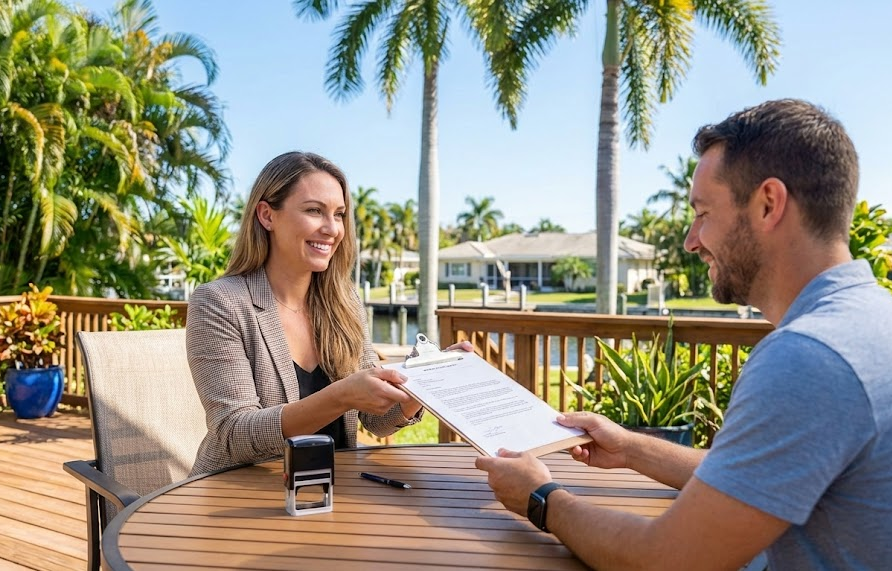
Implementing a mobile notary strategy
Integrating a mobile notary into your firm’s workflow doesn’t have to be complicated, but it does take some prep:
Vetting is key
Look for “notary signing agents” or professionals who market specifically to the legal industry. These individuals are more likely to be familiar with the format of legal pleadings, the difference between an oath and an acknowledgment, and the importance of not giving unauthorized legal advice.
Clear communication
When you dispatch a mobile notary, provide precise instructions, like:
- “Please notarize the signature on page 4 and page 8.”
- “The client needs to initial the bottom of every page.”
- “Please ensure the client receives a copy.”
The more specific you are, the smoother the transaction will be.
Cost-neutral billing
Worried about the cost? In most billing structures, the cost of a mobile notary is a reimbursable expense. It is a disbursement for “outside vendor services,” similar to a court reporter or a process server. This makes the service essentially cost-neutral for the firm while providing a higher level of service and protection for the client.

Mobile notary for attorneys: closing thoughts
The traditional model of the in-house notary will always have its place for routine matters. However, for sensitive documents, high-stakes litigation, or complex signings, the “do it yourself” approach can lead to unnecessary risk and inefficiency.
As seen above, hiring an independent mobile notary provides a layer of neutrality that protects the integrity of your documents and shields your firm from conflicts of interest. It allows you to extend your reach to hospitals, jails, and client homes without sacrificing your billable time.

When risk management and client service are on the line, Mobile Notary Orlando is the partner you need.
We understand that legal deadlines don’t wait, which is why we offer impartial, professional notarization services 24/7. Whether it’s a complex Power of Attorney or a standard affidavit, we are ready to assist across Orange, Seminole, Brevard, and Osceola counties.
We’ll be there for you – accurate, on time, and ready to work. Contact us today to streamline your next signing.