You just received a notarized document, and something about the signature of a notary public is giving you pause. Maybe the handwriting is illegible, the seal looks faded, or you’re simply not sure what that signature is supposed to confirm. Or maybe you’re on the other side: you need a document notarized this week for a closing, a power of attorney, or something going abroad, and you want to make sure the notary signs it correctly the first time.
Here’s the core of it: a notary’s signature confirms that a specific identification and witnessing procedure happened. It does not confirm the document is true, fair, or legally bulletproof. That gap between what people assume and what the signature actually certifies causes more rejected documents, delayed closings, and wasted trips than almost anything else in notarization.
What the Notary’s Signature Actually Certifies
A notary public is a state-commissioned officer. When a notary signs the certificate on your document, that signature says: “I confirmed this person’s identity, they appeared before me, and the required procedure was completed.”
That’s it.
The 2026 California Notary Public Handbook spells this out in its acknowledgment certificate language: the notary does not verify the truthfulness, accuracy, or validity of the document. The notary verified who signed it.
This distinction isn’t academic. In February 2026, a Memphis-area notary was sentenced to 57 months in federal prison for notarizing fraudulent quitclaim deeds that transferred more than 30 properties without the actual homeowners’ knowledge. Her commission was real. Her signature was real. The deeds were stolen.
When you see a notary’s signature, treat it as proof of procedure. For anything beyond that (the legitimacy of a sale, the accuracy of a statement, the fairness of a contract), you need independent verification.
Acknowledgment vs. Jurat: Two Acts, Two Different Signatures
The signature of a notary public appears on a certificate, and the wording of that certificate depends on which notarial act was performed. The two most common acts are acknowledgments and jurats. Getting them mixed up is one of the fastest ways to have a document rejected.
An acknowledgment means the signer appears before the notary and confirms: “I signed this document voluntarily.” The signer may have signed it beforehand, somewhere else. The notary verifies identity, hears the acknowledgment, completes the certificate, and signs.
A jurat is stricter. The signer must sign the document right there, in the notary’s presence, and swear or affirm under oath that the contents are true. Affidavits and sworn statements typically require a jurat.
Montana’s published notarial certificate forms show how the wording differs between the two, including separate versions for remote notarizations. The language is not interchangeable. A court expecting a sworn affidavit will reject an acknowledgment certificate, even if the notary’s signature and seal are perfect.
Before you meet the notary, ask the receiving party (bank, title company, court, foreign consulate) which act they need. That one question prevents the most common notarization do-over.
Signature, Seal, and Certificate: Three Parts of One Act
A notary’s signature doesn’t stand alone. It’s one piece of a complete notarization. South Dakota’s Secretary of State breaks a complete notarization into four required elements:
- The document signer’s original signature
- The notary’s original signature
- A legible, approved seal
- Commission expiration information
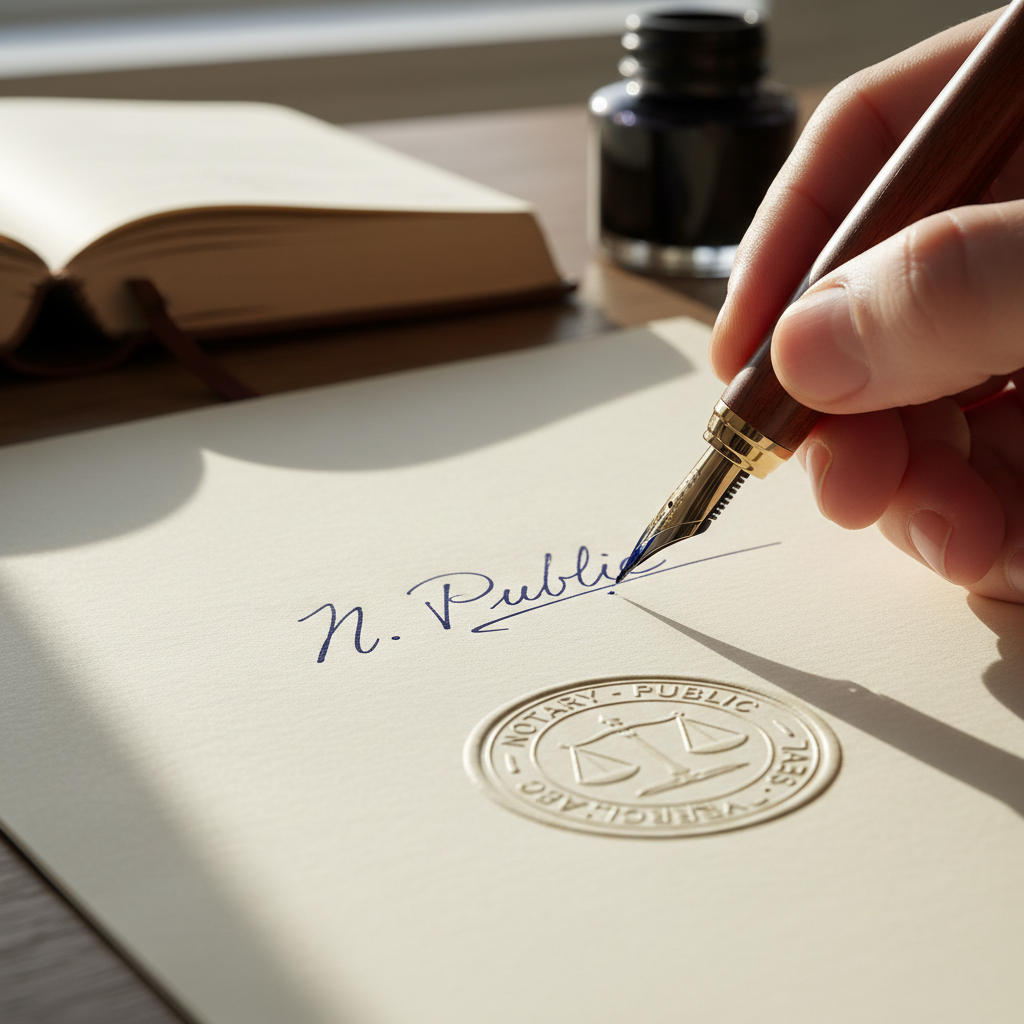
The seal (or stamp) ties the signature to an actual state-issued commission. It typically displays the notary’s name, commission number, commissioning state, and expiration date.
But not every state requires a seal. A state-by-state comparison published by Texas shows that Texas and California require one, while New York does not. The comparison itself carries a disclaimer: don’t use the table as a definitive ruling for any individual state.
In Florida, notaries must use an official seal that includes their name, the words “Notary Public, State of Florida,” the commission number, and expiration date. If you’re reviewing a Florida notarization, all of that should be clearly visible alongside the notary’s signature. Missing any single element can cause a title company or lender to kick the document back.
How to Tell If a Notary’s Signature Is Legitimate
If you’re looking at a notarized document and need to confirm the notary is real, start with the commissioning state’s records. Most secretaries of state offer free online lookups.
Illinois, for example, lets you search by name, commission number, city, or ZIP code. Florida’s Department of State offers a similar notary search tool. Check that the commission was active on the date shown on your document and that the name and jurisdiction match the certificate.
For property-related documents, the stakes are higher. A 2025 survey by the National Association of Realtors found that 63% of responding real-estate association officials were aware of title fraud or deed theft in their area in the preceding 12 months, with 62% of recent incidents involving vacant land.
Some counties go further. Champaign County in Illinois runs a free notary-fraud monitoring service that alerts property owners to suspicious recordings. If your county offers something similar, it costs nothing to sign up.
The bottom line: a valid commission doesn’t guarantee a legitimate transaction. But confirming the commission is step one, and it takes about two minutes.
Florida Rules and How They Shape Your Documents
Florida law gives notaries six basic duties: administering oaths and affirmations, taking acknowledgments, attesting to photocopies of certain documents, solemnizing marriages, verifying vehicle identification numbers, and certifying the contents of a safe deposit box. Each act requires the notary’s signature on the appropriate certificate. These services of a notary public follow strict procedures to ensure document authenticity.
For the documents we handle most often (mortgage closings, powers of attorney, affidavits, real estate deeds), the signature appears on either an acknowledgment or jurat certificate. The notary’s seal goes right alongside it.
Florida also permits online notarization. The state caps the online notarial-act fee at $25, though that cap applies specifically to the notarial act, not to other services wrapped into the transaction. Not every state is as permissive: California’s 2026 handbook explicitly states its notaries currently lack authority to perform remote online notarizations.
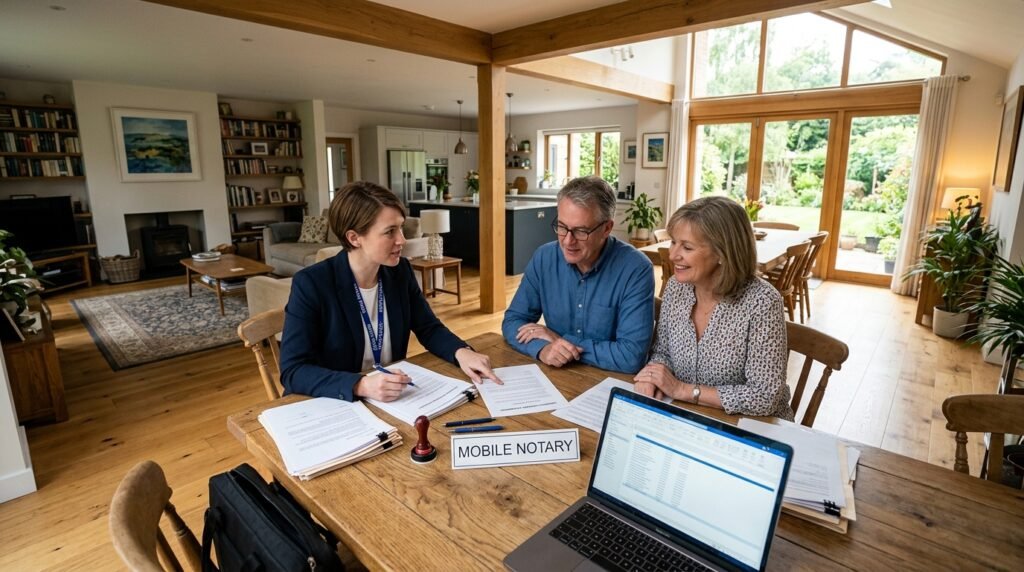
Whether a notarization happens in person at your kitchen table or through an authorized electronic process, the signature, seal, and certificate requirements remain the same. We serve clients throughout Orange, Seminole, Osceola, and Brevard counties, meeting them at home, at the office, at hospitals, or wherever is most practical. Learn more about what a mobile notary is and how they hold the same commission and follow the same rules as one sitting behind a desk. The procedure doesn’t change because the notary came to you.
When Your Notarized Document Crosses a Border
If a notarized document needs to be accepted in another country, the notary’s signature alone is rarely enough. Most countries participating in the Hague Convention require an apostille: a certificate issued by the Secretary of State that authenticates the notary’s signature, seal, and official capacity.
The apostille does not validate the document’s content. Oregon’s Secretary of State explains that the process involves comparing the notary’s certificate signature with the signature on file. It tells the foreign authority: “This notary is real and was commissioned when they signed this.”
In Florida, apostilles come from the Secretary of State’s office in Tallahassee, the only office in the state that issues them. You can file directly for $10 per document, or use a service that handles notarization, filing, courier delivery, and return shipping. Turnaround ranges from same-day (walking into the Tallahassee office) to five days by courier, seven to ten business days by priority mail, and potentially six weeks or more by regular mail.
We handle apostille certification regularly. We notarize the document, prepare the filing, and manage the courier process so you don’t have to drive to Tallahassee or wonder whether your envelope got lost.
When the Signer Can’t Write Their Name
This comes up more than you’d expect. A parent with advanced arthritis. A stroke patient who can no longer hold a pen. Someone who never learned to write.
Florida law and most other states allow a signature by mark, typically an “X,” when the signer cannot write their name. The process usually requires two disinterested witnesses who watch the mark being made and then sign the document themselves. The notary’s signature on the certificate confirms that the identification and witnessing procedure happened, even though the signer’s mark is not a written name.
Some states also permit a signature by surrogate: one person physically signs on behalf of another, at the signer’s direction and in the notary’s presence. The specific rules depend on the state and the type of document.
If you’re helping a family member who can’t sign a power of attorney, a living trust, or a medical directive, the document can still be properly notarized. We just need to know the situation beforehand so we follow the right procedure and your document doesn’t get rejected. Call or text us at (689) 285-5579 before the appointment, and we’ll walk through the details.

Frequently Asked Questions
Does a notary’s signature prove my document is legally valid?
No. The signature confirms that the notary verified the signer’s identity and performed the required act (acknowledgment, jurat, or oath). It does not certify the document’s truthfulness, accuracy, or legal effect. California’s official acknowledgment language makes this limitation explicit.
Is the notary’s signature the same as the seal?
They are separate elements. The signature is the notary’s handwritten (or electronic) sign-off. The seal is a stamp containing the notary’s name, commission number, state, and expiration date. Most states require both. South Dakota lists them as distinct components of a complete notarization.
Can a notary sign a document without being in the same room as the signer?
Only if the notary’s commissioning state authorizes remote online notarization (RON) and the notary follows the required audio-video, identity verification, and recording procedures. Florida permits RON. California currently does not. The commissioning state’s law and the receiving party’s acceptance both determine whether a remote notary signature will be valid.
How do I verify that a notary’s signature is genuine?
Search the commissioning state’s notary database. Most secretaries of state offer free online lookups by name or commission number. Confirm the commission was active on the date shown on your document and that the name and jurisdiction match the certificate information.
Does an apostille verify the notary’s signature?
Yes, but only the notary’s signature, seal, and official capacity. An apostille issued under the Hague Convention authenticates the official who signed the certificate. It does not verify the underlying document’s content or the transaction behind it.
Does a mobile notary’s signature carry the same weight as an office notary’s?
Identical weight. A mobile notary holds the same state commission and follows the same legal procedures as a notary in a bank, courthouse, or law office. The location of the notarization does not affect the validity of the signature, seal, or certificate.
If you need a document notarized in Central Florida, or you’re not sure whether your existing notarization will hold up, call or text us at (689) 285-5579. We work in English, Spanish, and Portuguese, and we’re available seven days a week. We’ll come wherever is easiest for you.