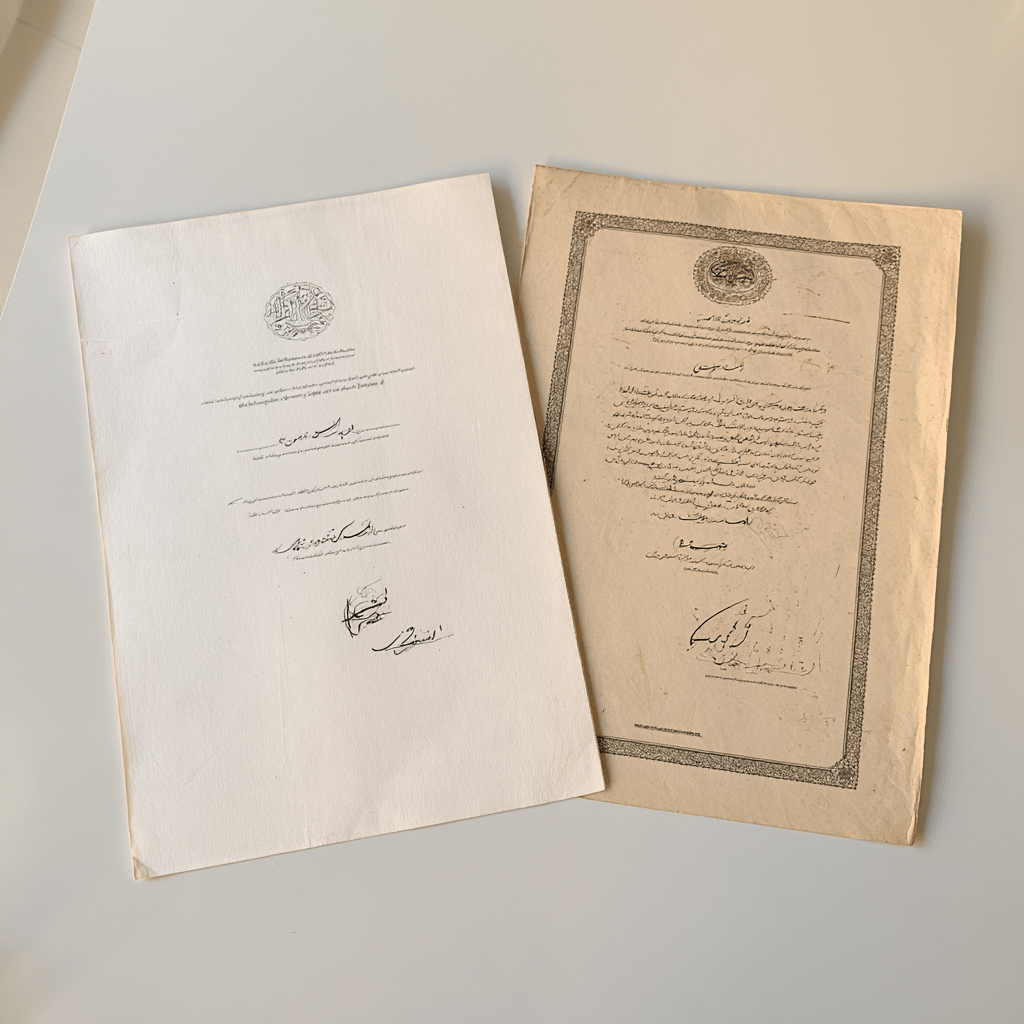
Someone told you to “get this notarized,” and now you’re wondering what that actually involves. The duties of a notary public are simpler than most people assume. A notary confirms who you are, makes sure you’re signing voluntarily, performs a specific official act, and creates a record of the whole thing. The notary is not a lawyer. The notary does not review whether your contract is fair or your power of attorney is airtight. Understanding what a notary does, and where the duties stop, saves you time and prevents surprises at the table.
The Core Duties of a Notary Public
Every state commissions notaries under its own laws, but four duties appear in nearly every jurisdiction. Colorado’s notary handbook, for example, identifies acknowledgments, oaths or affirmations, copy certifications, and signature witnessing as the principal notarial powers. Most states follow the same pattern with variations in detail.
Acknowledgments
This is the notarial act you’ll encounter most often. When you sign a deed, a mortgage, or a power of attorney, the notary verifies your identity and confirms that you executed the document voluntarily. The notary then fills out a certificate stating that you appeared, were identified, and acknowledged your signature.
Here is the part that catches people off guard: California’s notary handbook states that an acknowledgment verifies the signer’s identity, not the truth or legal validity of the document. If your contract has a bad clause, the notary stamp does not fix it. It confirms you are the one who signed.
Oaths and Affirmations (Jurats)
When a document requires you to swear that its contents are true (an affidavit, a sworn statement, a verification), the notary administers an oath or an affirmation. An oath invokes a higher power. An affirmation carries the same legal weight without the religious reference. Under a jurat, you typically sign the document in the notary’s presence after taking the oath or affirmation.
The distinction between a jurat and an acknowledgment matters more than it seems. If someone hands a notary a pre-signed affidavit and says “just stamp it,” the notary needs to pause. A jurat may require a fresh signature performed right there at the table.
Signature Witnessing
Some documents simply require an impartial witness to your signature. The notary confirms your identity, watches you sign, and records the act. This comes up with contracts, agreements, and documents headed to jurisdictions that demand witnessed signatures.
Copy Certification
Certain states allow notaries to certify that a photocopy is a true and accurate reproduction of an original. There is a limit that trips people up regularly: vital records (birth certificates, death certificates, marriage certificates) almost always must be certified by the government agency that issued them. A notary cannot substitute for the county clerk or vital records office on those documents.
How Florida Law Defines Notary Duties
Florida is one of the states that spells out notary duties broadly and specifically. Under Florida statute, a notary public is authorized to perform six acts:
- Administer oaths and affirmations
- Take acknowledgments
- Attest to photocopies of certain documents
- Solemnize marriages
- Verify vehicle identification numbers (VIN verification)
- Certify the contents of a safe deposit box
The last three set Florida apart. Florida is one of only a handful of states where a commissioned notary can legally officiate a wedding. VIN verification helps car buyers and sellers transferring titles, especially for vehicles with incomplete paperwork. Safe deposit box certification surfaces in estate cases when the box owner has died, and the contents need to be inventoried under an official witness.
Other states draw lines differently. Louisiana gives its notaries unusually broad powers, including the ability to receive wills, prepare certain legal instruments, and execute authentic acts. New York keeps the list narrower and caps most notarial fees at $2 per act. The takeaway: the state where the notary holds their commission determines what duties they may perform for you.
What a Notary Is Not Allowed to Do
Knowing the boundaries is just as useful as knowing the duties. A notary seal is one safeguard in a larger process. It is not a legal guarantee.
The most common misconception is that a notarized document is somehow “approved.” It is not. The notary verified your identity and performed the authorized act. The stamp says nothing about whether the document’s contents are true, whether the terms are fair, or whether a court will enforce it. If you need someone to review the legal substance, you need an attorney, not a notary.
A related confusion arises in immigrant communities where the Spanish word “notario” implies a professional with broad legal authority. In the United States, it does not. USCIS warns explicitly that a U.S. notary public cannot represent someone in an immigration case just because they hold a notary commission. Anyone who needs immigration legal help should work with a licensed attorney or a DOJ-accredited representative.
There is also a firm line around personal appearance. A notary cannot notarize a document without the signer present, either in person or (where state law authorizes remote online notarization) through a live audio-video session. A phone call does not count. An emailed scan of your driver’s license does not count. A family member showing up with your ID does not count. And a notary can never notarize their own signature or a document in which they have a direct financial interest.
What to Expect When You Sit Down with a Notary
If you have never had a document notarized, the process is faster and less formal than you might picture. Here is what typically happens, whether you’re at a title company, your kitchen table, or a hospital room.
The notary starts by checking your identity. Bring a valid, government-issued photo ID: a driver’s license, a state ID card, or a passport. The notary will check the photo, the name, and the expiration date. Some states also allow identification through a credible witness who personally knows you, but photo ID is the standard path.
Next, the notary determines which act is needed. The document itself usually specifies the notarial certificate type (acknowledgment, jurat, or another form). If you’re unsure, tell the notary what the document is for and who will receive it. The notary can match the right act to the document’s language.
Then comes a quick assessment of willingness and awareness. This is not a cross-examination. The notary looks for basic signs that you understand what you’re signing and that nobody is coercing you. If you appear confused, impaired, or pressured, a responsible notary will pause and may decline to proceed.
You sign (or, for a jurat, you take the oath first and then sign). The notary completes the certificate with the date, venue, type of act, and your name, then signs and applies the official seal. The act gets recorded in the notary’s journal.
For a standard document like a power of attorney, expect the process to take roughly 20 to 45 minutes depending on page count. A single-page affidavit might take ten minutes.
When Notary Duties Are Ignored, Fraud Follows
These duties exist because document fraud is real, and the notary’s verification is often the only checkpoint between a forged signature and a completed transaction.
Consider a federal case out of Sacramento. A commissioned notary named Rachel Siders falsely notarized mortgage documents with forged signatures. A bank extended a $250,000 home equity line of credit based on those papers, and Siders pocketed $170,000 in proceeds. The scheme was part of a larger operation involving over $30 million in fraudulent loans across more than 30 homes. Federal juries convicted her on fraud and identity theft counts.
The pattern repeats with deed theft. In August 2025, New York Attorney General Letitia James announced indictments alleging that two individuals took an elderly Queens widow’s home through forged transaction documents. According to prosecutors, a $552,500 mortgage was obtained and more than $300,000 was stolen after existing liens were paid. The defendants retain the presumption of innocence, but the allegations show exactly why identity verification and voluntary appearance are not steps a notary can skip.
In both cases, the same mechanism was at work: an official-looking notary seal gave fraudulent paperwork a credible path into a real financial system. Texas responded to this pattern with SB 693, effective in 2025, which strengthened criminal penalties for knowing notarization without personal appearance (especially involving real property) and added record-retention requirements stretching ten years.
For you as a signer, the lesson is practical. The notary who insists on seeing your ID, who asks whether you understand what you’re signing, who refuses to cut corners for the sake of speed, is doing the job right. Those few minutes of verification are your protection, too.

Frequently Asked Questions
Does notarization make a document legally enforceable?
Not on its own. Notarization confirms that the signer was identified and appeared voluntarily. It says nothing about whether the document’s terms will hold up in court, satisfy a lender, or comply with a specific statute. A court, government agency, or receiving party may impose separate requirements beyond the notary’s seal.
Do I have to sign the document in front of the notary?
It depends on the act. A jurat typically requires you to sign in the notary’s presence after taking an oath or affirmation. An acknowledgment may allow you to confirm a signature you already made, as long as you appear personally and acknowledge it as your voluntary act. Ask the party requesting the document which act they require before your appointment.
Can a notary handle an apostille for a document going abroad?
These are two separate processes. Notarization is one step; an apostille is a certificate issued by a designated government authority (like a Secretary of State) that authenticates a document for use in countries participating in the Hague Apostille Convention. The U.S. Department of State warns against notarizing a federal document being submitted for an apostille, since doing so can invalidate the process. If you need both, the order and procedure matter.
How much does a notarization cost?
There is no national price. Each state sets its own statutory fee cap. New York allows $2 per acknowledgment. California currently caps acknowledgments and jurats at $15 per signature. Texas permits its online notaries to charge up to $25 on top of regular notarial fees. A mobile notary who travels to your location may charge a travel fee in addition to the per-act fee. Ask for a complete quote before scheduling.
Can a notary come to my location instead of me going to an office?
Yes. A mobile notary travels to wherever you need them: your home, office, a hospital, a nursing home, or any other location. The NNA’s most recent census reported that over half of surveyed notaries work as mobile or signing agent notaries. If you’re under a deadline or unable to leave home, a mobile notary is the practical choice.
What should I bring to my notarization appointment?
At minimum: a valid, government-issued photo ID (driver’s license, passport, or state ID card) and the document to be notarized. If additional signers or witnesses are required, they need to be present with their own identification. Bring any instructions from the party requesting the notarization, since they determine which notarial act is needed and whether specific certificate language is required.
If you’re in Orange, Seminole, Osceola, or Brevard County and need a document notarized, we come to you. Call or text (689) 285-5579 to check available time slots. We work in English, Spanish, and Portuguese, and we’re reachable around the clock.