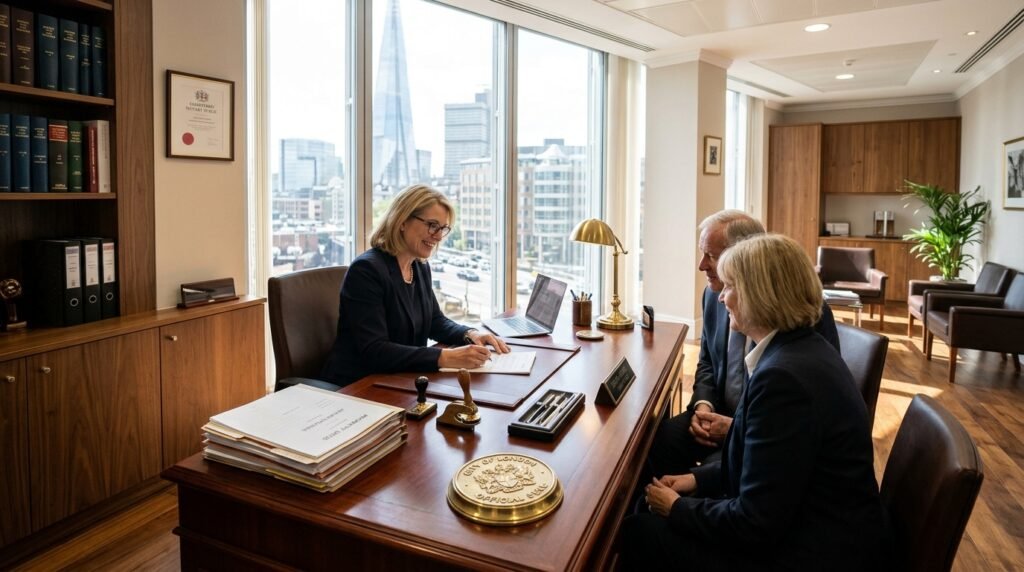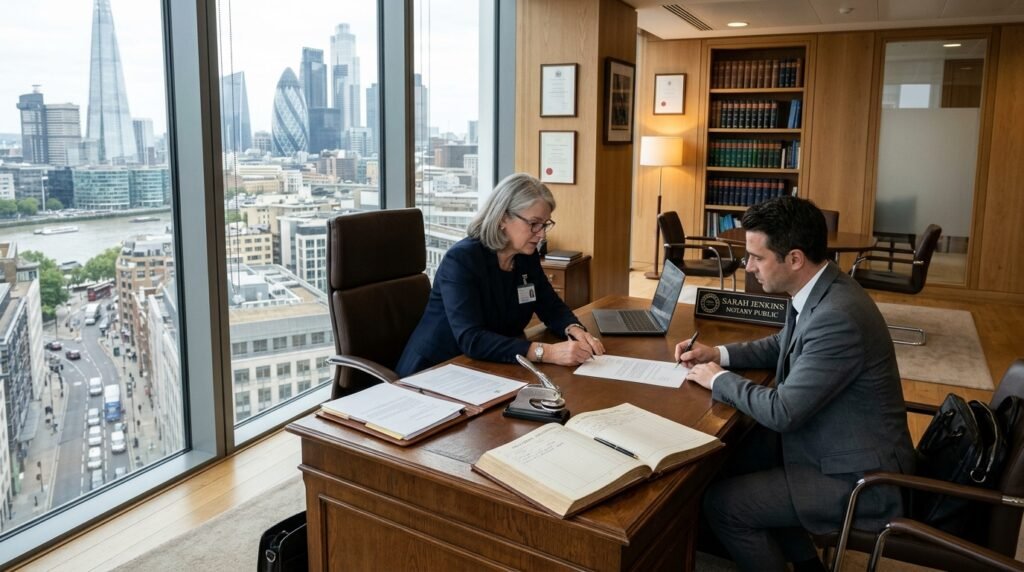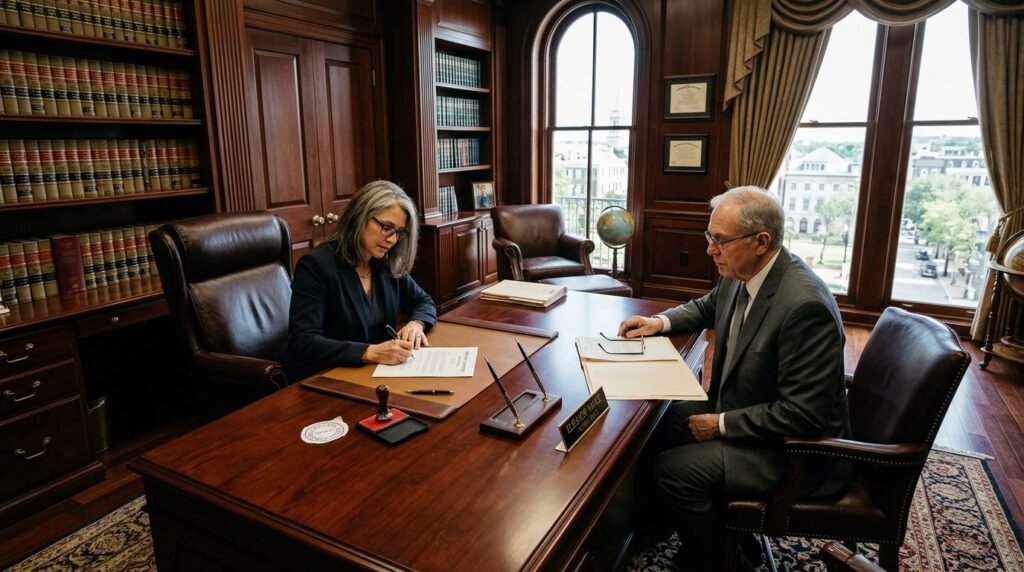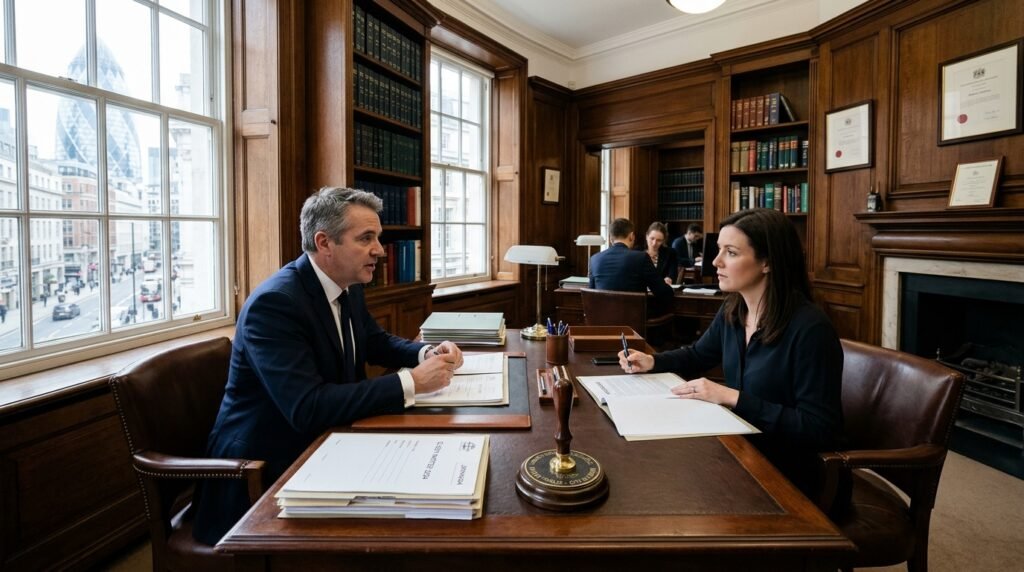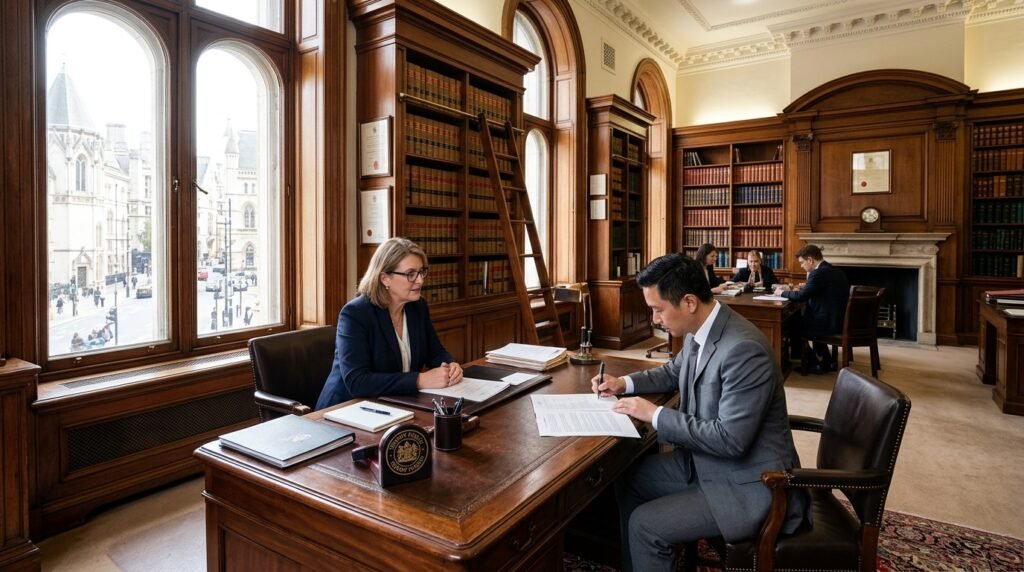
You’re holding a power of attorney, a loan affidavit, or a real estate form. The notary appointment is today. And you’re stuck on one question: should you sign this thing now, or leave it blank until you’re sitting across from the notary?
The answer to whether a notary can notarize an unsigned document is yes, you can absolutely bring an unsigned document to a notary appointment. In many cases, that’s exactly what you should do. But the notary cannot stamp the document and hand it back while the signature line stays empty. What controls the entire process is the type of notarial act your document requires. Get that part right, and everything else falls into place.
Acknowledgment vs. Jurat: The Distinction That Decides When You Sign
Every document that needs a notary stamp requires one of two main notarial acts. Mixing them up is the single most common reason appointments stall.
With an acknowledgment, you confirm to the notary that you signed the document voluntarily for its stated purpose. Pennsylvania’s guidance under the Revised Uniform Law on Notarial Acts (RULONA) states the rule clearly: you can sign before the appointment or sign right there in front of the notary, then acknowledge the signature. Either approach works. Real estate deeds, many contracts, and most power of attorney forms use acknowledgments.
A jurat is different. The notary watches you sign, then administers an oath or affirmation that the contents are true. Both steps must happen during the appointment. Affidavits are the classic example. If you already signed an affidavit at home, the notary has a problem: they didn’t witness the signing, so they can’t truthfully complete the jurat certificate.
The practical takeaway is simple. If your document requires a jurat, leave it unsigned and bring it to the appointment. If it requires an acknowledgment, you have flexibility.
| Notarial act | When signing must happen | Common documents |
|---|---|---|
| Acknowledgment | Before or during the appointment | Deeds, contracts, power of attorney forms |
| Jurat | During the appointment, in the notary’s presence | Affidavits, sworn statements, verifications |
How to Tell Which Act Your Document Needs
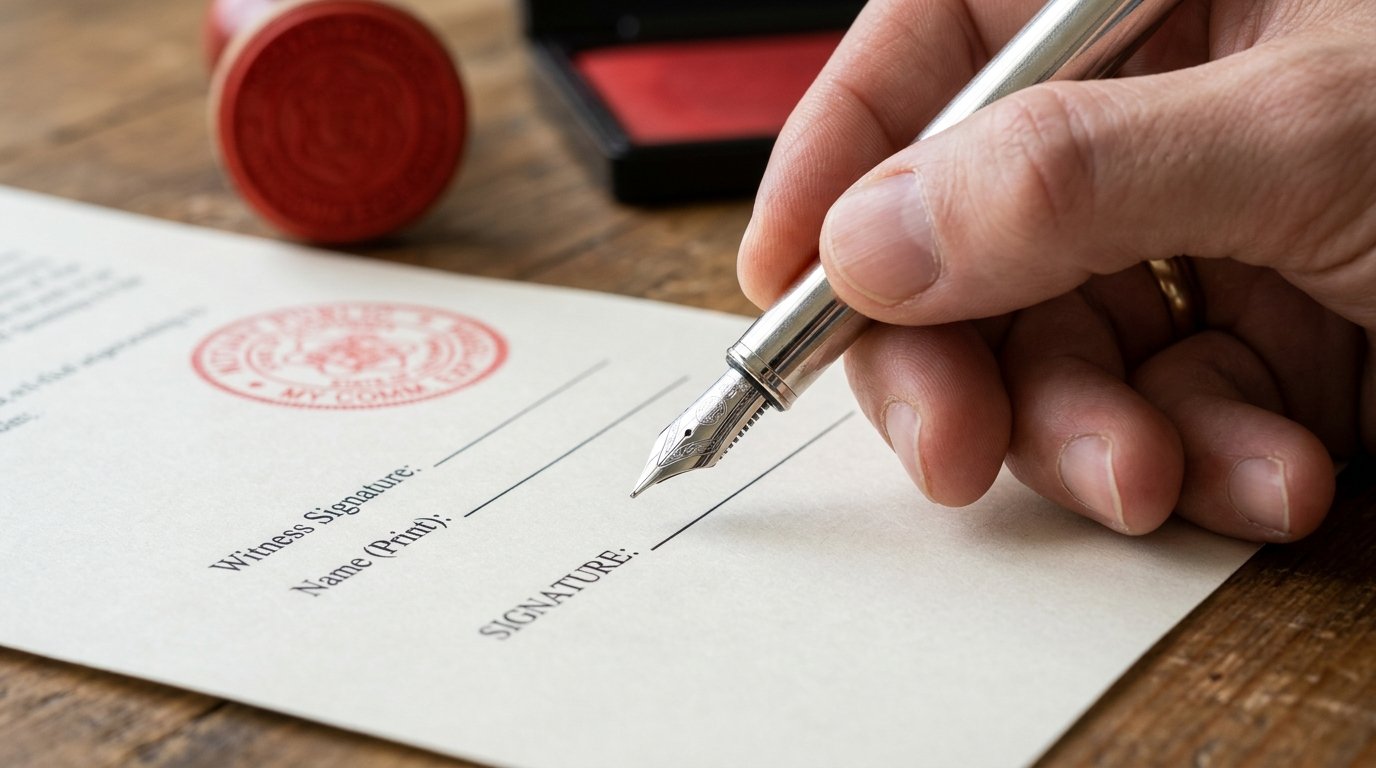
Look near the signature line. Most documents include notarial wording (sometimes called a “notarial certificate”) that tells you the required act.
- If you see “acknowledged before me” or “personally appeared and acknowledged,” it’s an acknowledgment.
- If you see “sworn to and subscribed before me” or “under oath,” it’s a jurat.
Some documents have no notarial wording at all. The notary can attach a separate certificate (called a loose certificate), but the choice of act still depends on what the receiving party requires. The National Notary Association recommends contacting the drafter or receiving agency before your appointment if you’re unsure. A bank, court, title company, or foreign consulate requesting the document should be able to tell you which act they expect.
We can’t choose the notarial act for you. That would cross into legal advice, and we’re not licensed to practice law in Florida. But we can explain the difference and help you figure out who to ask.
Unsigned Is Not the Same as Incomplete
Here’s where people get tripped up. An unsigned document waiting for your signature at the appointment is perfectly normal. An incomplete document, one with blank fields where substantive information belongs (the purchase price, the property address, the name of a party), is a different situation entirely.
Florida statute §117.107 prohibits a notary from notarizing a signature on a document that is incomplete or blank. The same statute also prohibits a notary from signing and delivering a blank notarial certificate for someone to use later. These aren’t suggestions. Violating appearance requirements under Florida law can carry a civil penalty up to $5,000.
Not every unfilled space counts as “incomplete,” though. A space reserved for the county recorder, a date field on a multi-signer form that won’t be filled until the last person signs: those are different. The NNA’s guidance on blank spaces explains the distinction. When in doubt, fill in every field you can before the appointment and ask about the rest.
Bottom line: bring a complete document with an unsigned signature line, and you’re in good shape.
Already Signed Before the Appointment? Here’s What Happens
For an acknowledgment, a prior signature generally works. You appear before the notary, show your ID, and confirm that the signature is yours and that you signed voluntarily. The notary doesn’t need to have watched you put pen to paper.
For a jurat, a prior signature creates a problem. The notary is supposed to certify that you signed in their presence. In some cases, you can cross out the existing signature, initial the correction, and sign again while the notary watches. Other situations may require a fresh copy of the document. The best move is to check with the notary or the document issuer before the appointment.
One thing no notary can do: backdate a certificate to make it appear they witnessed a signing that happened days or weeks earlier. The notarial certificate must reflect when the act actually occurred.
When a Signer Cannot Physically Write Their Name
Physical inability to hold a pen does not prevent notarization. State law provides alternatives.
In California, the 2026 Notary Public Handbook allows signing by mark (an “X” or similar) with two subscribing witnesses present. In Washington, a signer who is physically unable to sign may direct another person (not the notary) to sign on their behalf, with specific explanatory wording added to the document.
Florida has its own procedures for these situations. The key point: a path exists. Leaving the document permanently unsigned because the signer can’t physically write isn’t the only option.
If you or a family member are in this situation, whether at a hospital, a nursing home, or at home recovering, call or text us at (689) 285-5579. We handle these appointments regularly across Orange, Seminole, Osceola, and Brevard counties and can explain what’s needed before we arrive. We can meet you wherever you are.
Remote Online Notarization and Unsigned Documents
Remote online notarization (RON) follows the same acknowledgment-versus-jurat logic. The document can start as an unsigned digital file. You upload it, join a live video session with a commissioned notary, verify your identity, and sign electronically while the notary watches in real time.
The rules are specific. New York’s FAQ on electronic notarization requires real-time audiovisual interaction, credential-based identity verification, and an audiovisual recording retained for at least 10 years. Simply signing a PDF and emailing it is not notarization, even if someone watched over a regular video call.
Florida authorizes RON for its commissioned notaries under its own set of requirements. If you’re considering an online option, confirm that both the platform and the notary are authorized under the law that governs your specific transaction.
For most people in Central Florida who need a document handled quickly, though, an in-person mobile appointment is faster to set up and easier to manage, especially for documents like a power of attorney where you may have questions about the process itself.
Why Proper Execution Matters More Than You Think
When a document claims to be signed and notarized but the signing never actually happened, the consequences are real and recent.
In May 2024, a company attempted to foreclose on Elvis Presley’s Graceland estate based on a purported $3.8 million loan. The Florida notary named on the documents stated she had never met Lisa Marie Presley and never notarized any documents for her. A Tennessee court halted the sale within days. The person behind the scheme later received 57 months in federal prison.
Separately, a Memphis notary was sentenced to 57 months in February 2026 for notarizing fraudulent quitclaim deeds that transferred more than 30 properties without their owners’ knowledge. In one case, both people who purportedly signed the deed had already died.
These are fraud cases, not examples of honest confusion. But they illustrate something important: the notarial act exists to confirm that a real person actually executed a real document. Courts, banks, title companies, and foreign governments rely on that confirmation. When it’s missing or fabricated, everything built on it collapses.
This is also why ALTA’s 2026 study found that 59% of surveyed title firms experienced at least one seller-impersonation attempt in the prior year. The safeguards around signing and notarization aren’t bureaucratic formalities. They’re the front line.
How to Prepare for Your Notary Appointment
Before you meet with a notary, review the requirements to notarize a document and run through these steps:
- Check the notarial wording near the signature line. Determine whether your document calls for an acknowledgment or a jurat.
- If it’s a jurat, do not sign yet. Bring the document unsigned.
- If it’s an acknowledgment, you can sign beforehand or wait. When in doubt, wait.
- Fill in all substantive blanks: names, addresses, dollar amounts, dates you already know. Don’t leave deal terms empty.
- Bring a valid, government-issued photo ID. In Florida, acceptable forms include a driver’s license, passport, or state-issued ID card.
- If the document requires witnesses, arrange for them to attend. Some documents (like a Florida self-proving will) need two witnesses in addition to the notary.
- If another signer is unavailable, find out whether they need a separate appointment. A notary can act for the signer who appears but cannot certify the appearance of someone who isn’t there.
- If the notarized document will be used abroad, ask the receiving country whether you also need an apostille from the Florida Secretary of State. Notarization comes first; the apostille authenticates it for international use.
If any of these steps raise questions, that’s exactly why we’re here. Call or text us at (689) 285-5579 to check available time slots. We come to your home, your office, the hospital, or wherever you need us across Orange, Seminole, Osceola, and Brevard counties. We work in English, Spanish, and Portuguese, and we’re reachable 24/7.

Frequently Asked Questions
Can I bring an unsigned document to a notary?
Yes. For a jurat, bringing it unsigned is actually required because you must sign in the notary’s presence. For an acknowledgment, you may sign beforehand or at the appointment. In either case, the notary cannot complete the notarial act while the required signature is still missing.
What happens if I already signed a document that needs a jurat?
The notary may ask you to cross out the existing signature, initial the correction, and sign again while they watch. Some situations require a fresh copy of the document. Contact the notary or the document issuer before the appointment to confirm the best approach for your specific form.
Can the notary stamp my document now so I can sign it later?
No. Florida law prohibits a notary from executing and delivering a blank notarial certificate. The certificate must reflect an act that actually occurred: your personal appearance, identity verification, and signature or acknowledgment.
What if my document has no notarial wording?
The notary can attach a separate certificate (a loose certificate), but the choice of act depends on what the receiving party requires. Ask the bank, court, title company, or agency requesting the document whether they need an acknowledgment or a jurat before your appointment.
Can a notary help someone who physically cannot sign their name?
Yes. Most states provide procedures for signing by mark (such as an “X”) with witnesses, or for directing another person to sign on the signer’s behalf. Florida has its own specific requirements. Call or text us and we’ll walk you through the steps before we meet.
Do all signers on a document need to be at the same appointment?
No. A notary can handle each signer’s portion in a separate appointment. The notarial certificate must accurately reflect who appeared at each session. The absent signer will need their own appointment with a notary, which can happen at a different time and place.