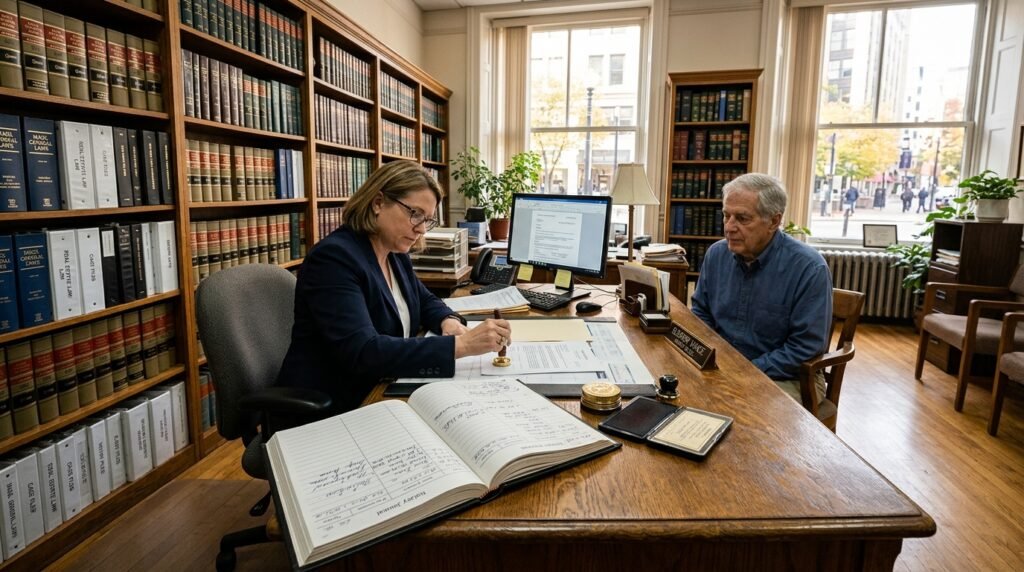
It’s Saturday morning. You need a mobile notary in Orlando, and every office-based option you can think of is closed until Monday. Maybe a loan closing landed on the weekend. Maybe a family member in the hospital needs a power of attorney signed today. Maybe you’re visiting from out of town and fly home Sunday night.
A weekend mobile notary solves this by traveling to you: your house, a hospital room, a hotel, a coffee shop, wherever you are. The seal carries the same legal weight as any weekday notarization. The process is the same. The only difference is who does the driving.
Here’s what to know before you schedule.
A Weekend Notarization Is Legally Identical to a Weekday One
Florida law does not restrict notarial acts to business hours. The six duties a Florida notary public can perform (administering oaths, taking acknowledgments, attesting to photocopies of certain documents, solemnizing marriages, verifying vehicle identification numbers, and certifying safe deposit box contents) apply seven days a week, all year.
A document you sign on Sunday at your kitchen table holds the same legal standing as one signed in a law office on Wednesday at 2 p.m. What matters is that the notary holds a valid Florida commission, uses the correct notarial certificate (acknowledgment, jurat, or oath), and follows proper identification procedures.
If anyone tells you a weekend notarization is “less official” or needs to be redone during business hours, that is wrong.
What to Have Ready Before the Notary Arrives
The fastest way to turn a 20-minute appointment into a frustrating dead end is showing up unprepared. Four things need to be in order before your weekend appointment.
Start with identification. Florida statute lists the forms of ID a notary can accept, including a current Florida driver license, a Florida ID card, and a U.S. passport. The ID must be current or issued within the previous five years. If yours is expired, foreign-issued, or carries a different name than what appears on the document, call before the appointment. We can walk you through what the law allows so nobody wastes a trip.
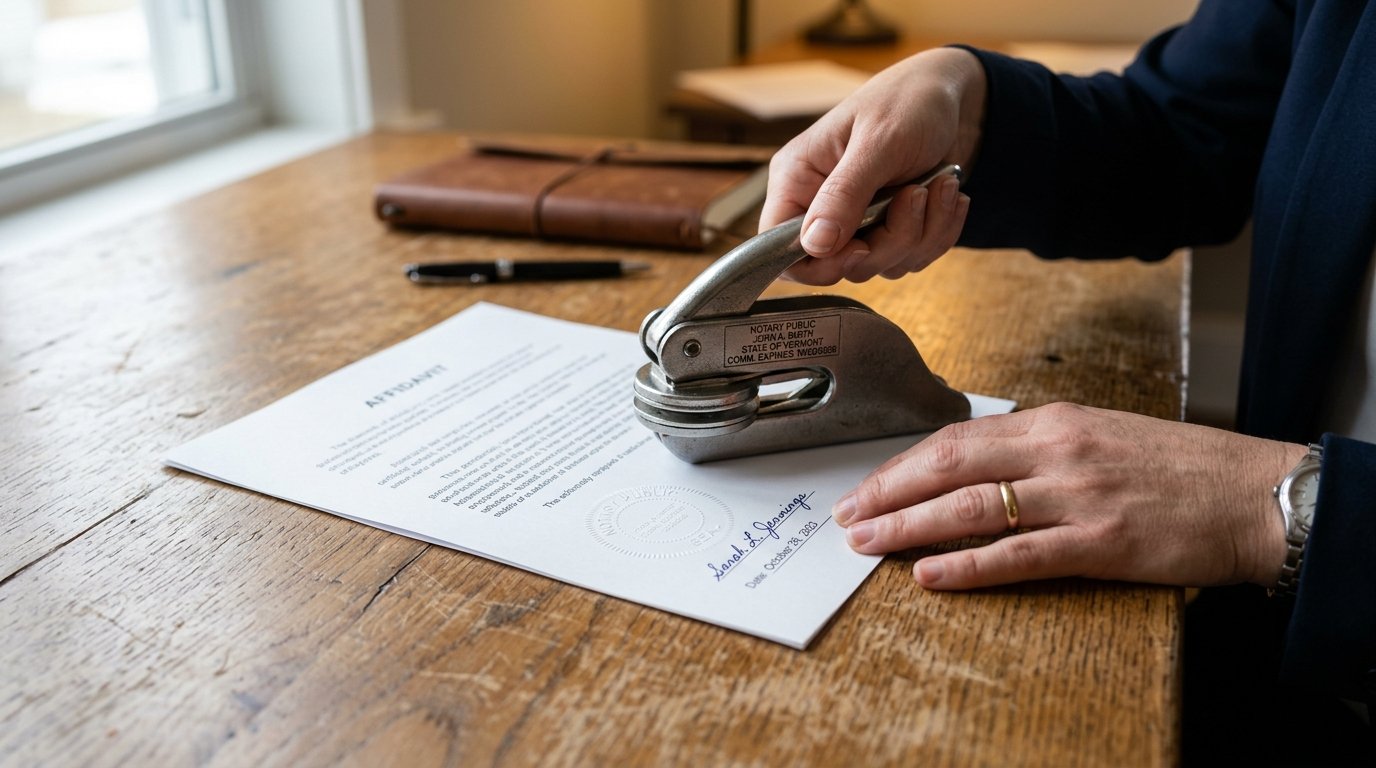
Next, have the complete document printed, reviewed, and ready, but unsigned. A Florida notary cannot notarize a blank or incomplete document. Do not sign before the notary arrives. If the document requires a jurat (a sworn statement), you will sign in front of us after taking an oath or affirmation, and we’ll record details in our notary journal. If it requires an acknowledgment, you will confirm that the signature is yours and was made voluntarily.
Every signer must be present. A notary cannot notarize a signature for someone who is not there. Florida’s notary guidance makes this explicit: no one can stand in for an absent signer. If your document has multiple signers, all of them need to appear at the same appointment, or each needs a separate one.
Finally, witnesses. This one trips people up more than anything else and deserves its own section.
Witnesses: The Detail That Catches People Off Guard
A notary seal and a witness signature serve different legal purposes. Many documents need both, and the notary does not automatically count as one of your witnesses.
A Florida power of attorney requires two subscribing witnesses in addition to the principal’s signature and a notarial acknowledgment. Skip the witnesses and the document may not hold up when your agent tries to use it at a bank, hospital, or title company.
A Florida will requires at least two attesting witnesses who sign in the presence of the testator and in the presence of each other. That rule comes from the will execution statute and is separate from notarization requirements entirely.
On a weekday at a law office, witnesses are usually the staff down the hall. On a Saturday at your dining room table, you need a plan. Tell us what document you are signing when you call, and we will make sure witnesses are arranged before we arrive. This single detail prevents more failed weekend appointments than anything else we see.
What a Weekend Mobile Visit Costs
Florida law caps most traditional notarial acts at $10 per signature per act. That is the state-regulated notarization fee.
A mobile visit includes more than the seal. It covers travel, scheduling around your weekend availability, arriving at a non-office location, and the convenience of staying wherever you are instead of driving across town. Weekend and after-hours appointments typically carry a higher fee than a midweek daytime visit because the notary is working outside standard business hours.
Ask for a total, all-in quote before confirming any mobile notary appointment. Know how many documents need notarization, how many signers are involved, whether witness coordination is included or separate, and whether cancellation or waiting-time charges apply. You want clarity at the time of booking, not a surprise at the door.
Where We Meet You
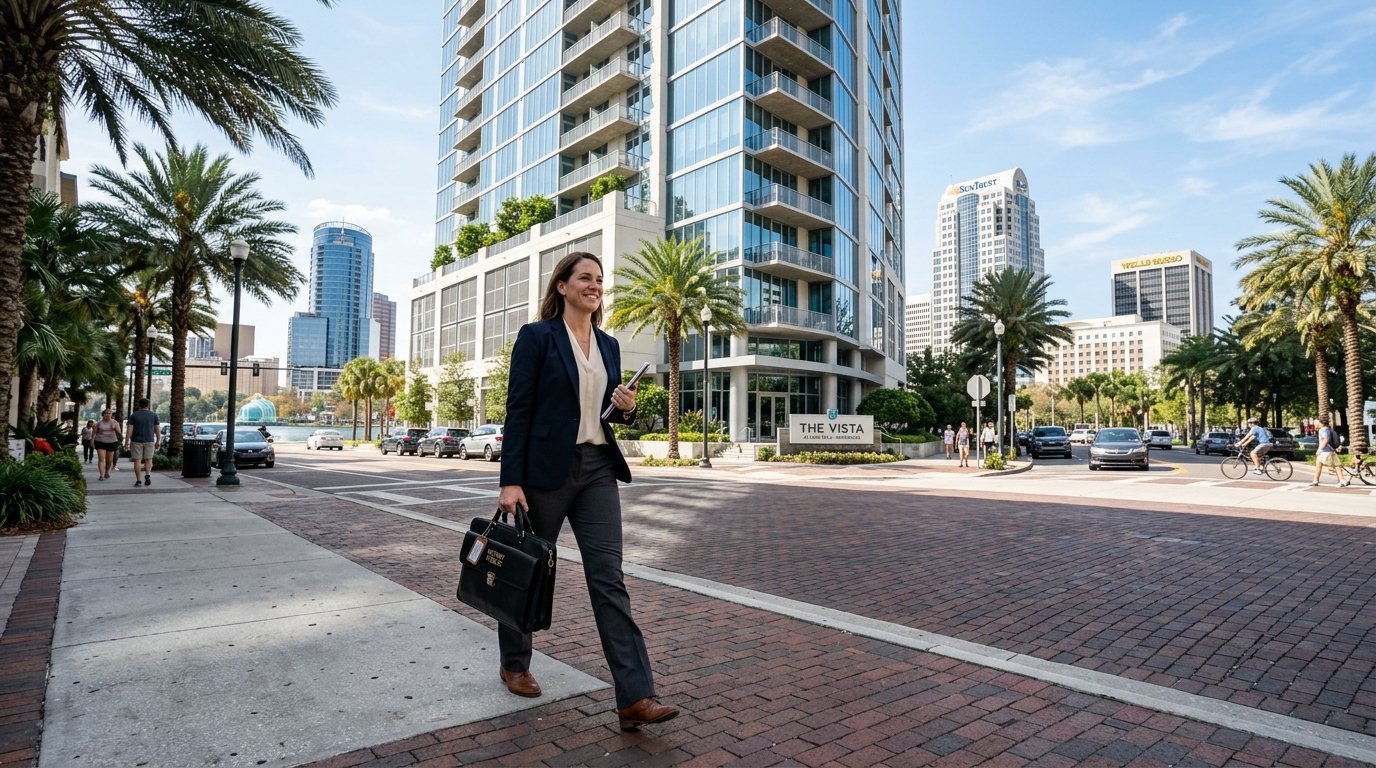
The whole point of a mobile notary service is that we drive, not you. Common weekend meeting locations include:
- Your home or apartment
- Hospitals and rehabilitation centers
- Nursing homes and assisted living facilities
- Hotels (especially useful if you are visiting Orlando and need a document notarized before your flight home)
- Your workplace or job site
- Coffee shops, libraries, or any quiet spot where you can sit and sign
We cover Orange, Seminole, Osceola, and Brevard counties. That includes Orlando, Kissimmee, Sanford, Melbourne, and the surrounding communities. We also work in English, Spanish, and Portuguese, which matters when the signer, the document, or both involve a language other than English.
Hospital visits come with one extra consideration. Florida law prohibits notarization when the signer appears mentally incapable of understanding the document’s nature and effect. If a family member is sedated, heavily medicated, or not fully alert, we need to assess the situation honestly before proceeding. A notarization performed on someone who cannot comprehend what they are signing can be challenged and invalidated later. Call us first. Describe the circumstances. We will give you a straight answer about whether the appointment makes sense.
Loan Closings, Powers of Attorney, and Apostilles on Weekends
Three types of weekend appointments come up more than any other.
Loan closings
A real estate transaction does not pause for the weekend. When a title company or lender schedules a closing on Saturday, they need a notary signing agent who can handle a full set of mortgage documents correctly: every signature in the right place, every notarial certificate completed, the entire package returned to the title company on time. We work with title companies and lenders across Central Florida to make sure weekend closings do not become Monday problems.
Powers of attorney
Weekend POA requests almost always involve urgency. A parent in the hospital. A family member about to travel overseas. A military deployment with a short notice window. A power of attorney signing typically takes 20 to 45 minutes depending on page count and requires two witnesses and a notarial acknowledgment. Getting the execution right the first time matters, because a defective POA is useless at the moment you actually need it.
Apostilles for international documents
If a document needs to be authenticated for use in another country under the Hague Convention, there are two separate steps. First, the document gets notarized. Second, it goes to the Florida Secretary of State in Tallahassee for apostille certification, which costs $10 per document at the state level. We can handle the notarization and the courier to Tallahassee, with turnaround as fast as five days. Getting the notarization done on Saturday means the document ships Monday morning instead of sitting idle until midweek.
Frequently Asked Questions
Is a document notarized on Saturday or Sunday legally valid?
Yes. Florida notarial authority applies seven days a week, all year. A document notarized on the weekend carries the same legal weight as one notarized during business hours. What matters is proper identification, the correct notarial certificate, and a notary with a valid Florida commission.
How quickly can a mobile notary arrive on a weekend?
It depends on location and current schedule. Call or text us at (689) 285-5579 with your address, document type, and number of signers. We accommodate same-day weekend requests whenever our schedule allows and will confirm an arrival window before we head your way.
Do I need to arrange my own witnesses?
It depends on the document. A Florida power of attorney requires two subscribing witnesses. A will has its own two-witness requirement. Tell us what you are signing when you call, and we can coordinate witnesses so you do not have to scramble on a Saturday.
Can a notary visit someone in the hospital on a weekend?
Yes. We regularly handle hospital and bedside notarizations. The signer must be alert and capable of understanding the document. Florida law prohibits notarization when the signer appears mentally incapable. Call us with the specifics, and we will tell you honestly whether the appointment is feasible.
What if my ID is expired or does not match the name on the document?
Florida recognizes IDs that are current or were issued within the last five years. If yours falls outside that window, or if your name has changed since it was issued, call us before the appointment. We will walk you through what identification options the law allows so there are no surprises when we arrive.
Do you work in languages other than English?
Yes. We work in English, Spanish, and Portuguese. If language is a concern for any signer at the appointment, let us know when you call so communication is smooth from start to finish.
If you need a notary this weekend, call or text us at (689) 285-5579 to check available time slots. We can meet you at home, your office, the hospital, or anywhere else in Orange, Seminole, Osceola, or Brevard County. Tell us what you need signed, and we will handle the rest.