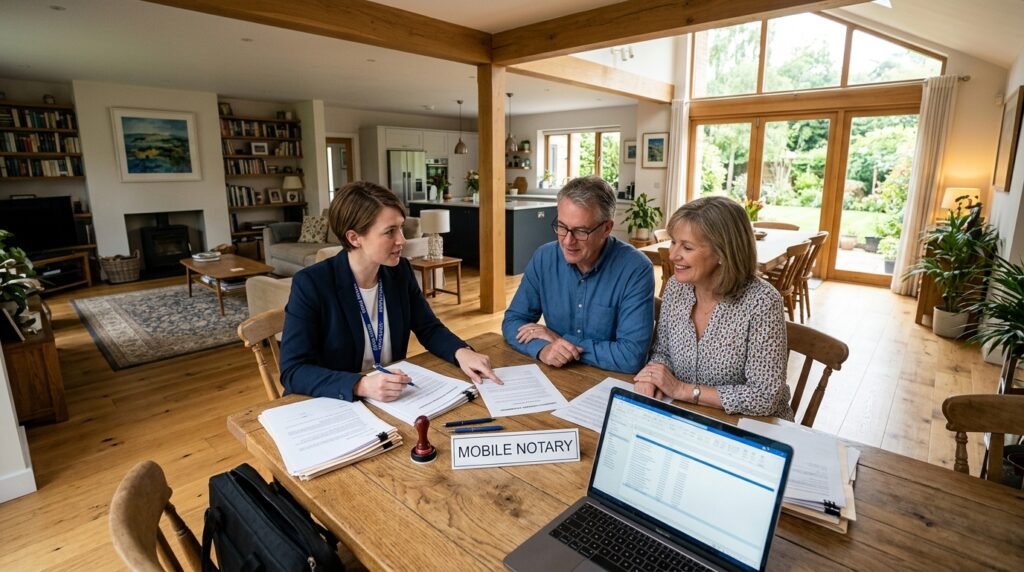
You need a document notarized, but you’re not in Orlando. You’re in Kissimmee with a closing deadline. Or Sanford, where your parent just entered a care facility. Or Melbourne, staring at a power of attorney that has to be signed this week. So do mobile notaries actually travel outside Orlando to reach you?
Yes. A Florida notary commission authorizes notarial acts anywhere within state lines. No city limit, no county boundary on the commission itself. The practical limits come down to the provider’s service area, scheduling, and fees. Here’s how it works so you can book the right appointment without overpaying or wasting a trip.
A Florida Notary Commission Covers the Entire State
Florida commissions notaries for four-year terms. The legal scope of that commission is statewide. A notary based in Orlando can drive to Sanford, Clermont, Cocoa Beach, or Daytona Beach and perform a perfectly valid notarization. The notarial certificate will identify the county where the act took place, not the county where the notary has an office.
What the commission does not do is force any mobile notary to accept every request. Each provider draws their own service area based on drive time, staffing, and whether the appointment pencils out. A notary saying “we serve Central Florida” might mean four counties or eight. The only way to find out is to provide your exact address.
One hard limit to know: the commission stops at the state border. A Florida notary cannot drive into Georgia and perform an in-person notarization there. If the signer is out of state, remote online notarization (covered below) may solve the problem without anyone crossing a state line.
Counties and Cities That Mobile Notaries Commonly Serve
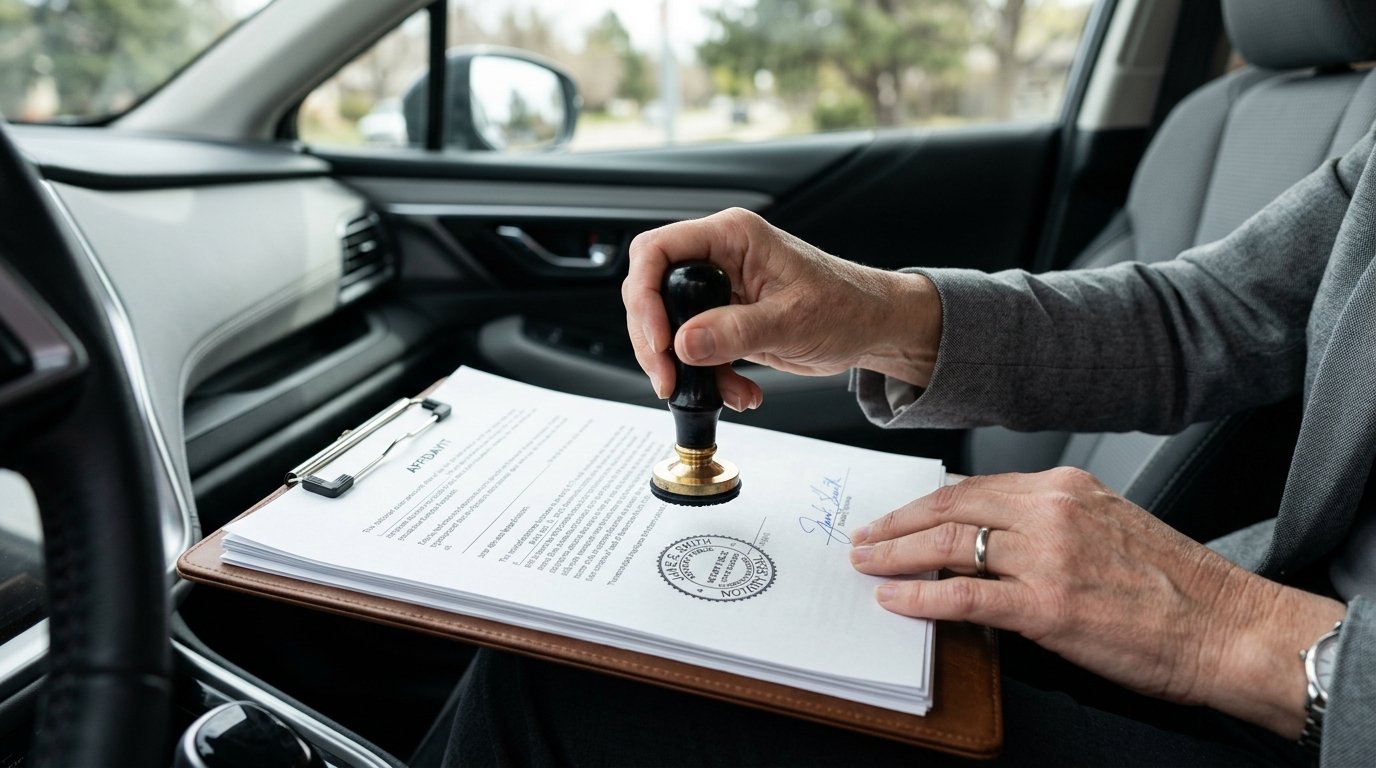
Most Orlando-based mobile notaries cover a multi-county region, not just the city of Orlando or Orange County alone. At Mobile Notary Orlando, our regular service area includes Orange, Seminole, Osceola, and Brevard counties. In practical terms, that covers cities and communities like:
- Kissimmee, St. Cloud, and Celebration (Osceola County)
- Sanford, Lake Mary, Altamonte Springs, Casselberry, and Oviedo (Seminole County)
- Melbourne, Cocoa Beach, Titusville, and Palm Bay (Brevard County)
- Winter Park, Winter Garden, Clermont, and Apopka (Orange County and surrounding areas)
Some providers extend into Volusia or Lake County. Others stay closer to a single county. There is no industry standard radius. If your document involves a power of attorney, a real estate closing, or a medical directive, the notary needs to see the signer in person at whatever location works: your home, a hospital room, an office lobby, or a coffee shop.
The question to ask isn’t “Do you serve Central Florida?” It’s: “Will you come to this address, at this time, for this document? And what’s the total cost?”
How Travel Fees Work Beyond Orlando City Limits
This is where most confusion lives. Florida law caps the fee for an ordinary notarial act at $10. That’s the stamp, the signature, the certificate. It does not cover the drive to your location.
Travel is a separate charge. Florida sets no specific cap on it. The National Notary Association recommends that travel fees be disclosed separately from the notarization fee, and that’s standard practice in Central Florida.
What this means for your appointment:
- A signing within the notary’s primary area carries a smaller travel component or may be bundled into a flat rate.
- A signing 30 or 40 miles out will cost more, reflecting fuel, tolls (the 417 and the Turnpike add up), and time on the road.
- After-hours, weekend, or holiday appointments typically carry a premium on top of regular travel.
- Hospital or facility visits may include extra charges for wait time and access logistics.
Before you confirm, ask for the complete number. Not just the per-act fee. Everything: notarization, travel, printing if needed, witnesses if applicable, and cancellation terms. Some providers charge travel even if the signing can’t proceed because the signer lacked valid ID or the document was incomplete. Others waive the fee in that scenario. Know the policy before someone gets in the car.
What to Have Ready Before the Notary Arrives
When a notary drives 20 or 40 miles to reach you, a failed signing means you paid for travel and got nothing notarized. Every wasted trip outside Orlando costs the client money and time. Here’s how to prevent it.
Valid identification
Florida requires the notary to verify the signer’s identity through personal knowledge or satisfactory evidence. Accepted IDs include a current Florida driver’s license or ID card, a U.S. passport, or qualifying identification from another state. The statute allows specified IDs that are current or issued within the past five years, with an identifying number. Bring the physical original. A phone photo of your license is not acceptable.
If the signer cannot produce proper ID, Florida law provides a credible-witness identification route, but with strict conditions. A friend or family member doesn’t automatically qualify. Tell the notary about any ID problems before the appointment.
The completed document
Florida prohibits a notary from notarizing a blank or incomplete document. If you’re bringing a power of attorney, affidavit, or deed with blanks to fill in later, the notary cannot proceed. Names, dates, property descriptions, and all relevant details must be filled in before the appointment starts.
Witnesses (if required)
Some documents need execution witnesses in addition to the notary. Wills typically require two. Certain powers of attorney and trusts may need them depending on how they’re drafted. These witnesses serve a different legal purpose from the notary’s own role.
Ask your notary whether they bring witnesses. We provide witnesses when needed for our mobile notary appointments across Central Florida. Not every provider does. Free notary services at public libraries, for instance, typically won’t supply witnesses or let you recruit them from other patrons.
Signer awareness and capacity
A notary cannot proceed if the signer appears unable to understand the nature and effect of the document. This isn’t a medical diagnosis. It’s a legal obligation the notary must assess in the moment. If you’re scheduling a signing for someone in a hospital or care facility, choose a time when the signer is alert and oriented. If there are real concerns about capacity, consult an attorney before booking the notary.
Hospital and Facility Visits Outside Orlando
This is one of the most common reasons people look for a mobile notary willing to travel. A parent is in a Brevard County hospital. A spouse is recovering in an Osceola County rehabilitation center. The power of attorney or healthcare directive can’t wait until discharge.
Mobile notaries can and do visit hospitals, nursing homes, assisted living facilities, and rehab centers. We’ve done signings in patient rooms, ICU family areas, and facility common rooms across Central Florida. But several things need to happen first:
- Confirm the facility allows outside visitors for document signings. Some hospitals require advance notice. Some have restricted floors or hours.
- Make sure the signer has valid identification at the facility. Hospital stays don’t always include a wallet.
- If the signer cannot physically hold a pen, Florida provides a statutory accommodation. The notary may sign on behalf of a physically unable signer, but only with two disinterested witnesses and a special certificate statement. Arrange this before the notary arrives, not at bedside.
- Coordinate with medical staff on timing. A signing during sedation or immediately after a procedure is a recipe for a failed trip.
The drive to the facility is the easy part. The preparation is what determines whether the appointment succeeds.
When Remote Online Notarization Makes More Sense Than a Drive
Sometimes the signer isn’t 40 miles away. They’re 400 miles away, in another state, or in another country. That’s where remote online notarization (RON) enters the picture.
Florida’s RON framework has been active since January 1, 2020. A registered Florida online notary conducts the notarization through an authorized audio-video session with identity verification and a recorded proceeding. The notary must be physically in Florida. The signer can be anywhere.
RON works well when:
- The signer is out of state or abroad and can’t be present in person.
- The distance within Florida makes travel costs unreasonable.
- The document and its receiving organization accept online notarization.
RON has limits, though. Florida imposes special remote-witness rules for certain wills, trusts, healthcare directives, and powers of attorney. Some title companies and lenders still require wet-ink signatures. And the signer needs a camera, microphone, and stable internet connection.
The fee structure differs, too. Florida caps the online notarial act at $25 (compared to $10 in person), and the RON platform’s own service fees are separate from that statutory cap. Compare the full cost of RON against the full cost of a mobile visit before deciding.
And if your document needs to be used in another country, notarization is just step one. You’ll likely need an apostille from the Florida Secretary of State to authenticate the document under the Hague Convention. That process has its own timeline, ranging from same-day if filed in person in Tallahassee to 7 to 10 business days by courier.
Frequently Asked Questions
Is there a legal limit on how far a Florida mobile notary can travel?
No mileage or county restriction exists on the commission itself. A Florida notary can perform notarial acts anywhere within state lines. The practical limit is each provider’s own service area. The commission does not extend across the Florida state border, so out-of-state locations require a different approach.
Will I pay more if the notary has to drive outside Orange County?
Typically, yes. Florida caps the notarization at $10 per act, but travel is a separate, unregulated charge. Longer drives, after-hours requests, and facility visits usually cost more. Always ask for an itemized total that includes travel, notarization, witnesses, and cancellation terms.
What if the signing can’t be completed after the notary drives out?
Policies vary by provider. Some charge travel regardless of outcome, such as when the signer lacks valid ID or the document is incomplete. Others waive the fee. Clarify the failed-visit policy before anyone makes the drive, especially for longer trips.
Can a mobile notary visit a hospital in Brevard or Osceola County?
Yes, provided the facility permits outside visitors for signings and the signer meets Florida’s identification and capacity requirements. Coordinate facility access, bring valid ID, and arrange any needed witnesses before the appointment to prevent a wasted trip.
Should I use remote online notarization instead of a mobile visit?
RON is a strong option when the signer is out of state, abroad, or at a distance that makes travel impractical. Confirm that the document type, the receiving organization, and the signer’s technical setup all support online notarization before committing.
Does a mobile notary bring witnesses?
Some do, some don’t. If your document requires execution witnesses (many wills, certain powers of attorney), ask the provider whether they supply them and at what cost. Don’t assume witnesses will be available at the signing location, especially at hospitals or public venues.
If you’re in Orange, Seminole, Osceola, or Brevard County and need a notary to come to you, call or text us at (689) 285-5579. We speak English, Spanish, and Portuguese, and we work around the clock. Give us the address, the document type, and when you need it done. We’ll confirm availability and total cost before we head your way.