
Visa applications involve a lot of paperwork, and some of it needs more than just a signature. Depending on the visa type, the destination country, and who is asking for the documents, a notary public may be required at several points along the way.
This is also an area where people often run into confusion. A notary does not approve or assist with the visa itself. What they do is authenticate the identity of the person signing a document and verify that the signature is genuine. That distinction matters – mostly because the notary’s role here is entirely about the supporting documents, not the application decision itself.
This article explains when a notary for visa application purposes is needed, which documents typically require one, and what the process looks like in practice.
When does a visa application require notarization?

Not every visa application calls for a notary, and the requirement depends on the specific visa type and the country involved. That said, there are two situations that come up all the time.
Applying for a US visa from abroad
Foreign nationals applying for a US visa are sometimes asked to provide notarized supporting documents alongside their application.
Affidavits of support, financial declarations, and personal statements confirming specific circumstances are the most common.
Requirements vary by visa category and by the consulate handling the application, so it’s always worth checking the specific instructions from U.S. Citizenship and Immigration Services or the relevant US embassy before preparing anything.
Applying for a foreign visa as a US resident
US residents applying for visas to other countries run into notarization requirements more frequently.
Many foreign embassies and consulates require notarized affidavits, notarized copies of supporting documents, or notarized sponsorship letters as part of their standard application process.
The requirements vary significantly by country, so checking with the destination country’s consulate directly is always the best first step.
Which documents commonly require a notary for visa applications?

Affidavit of support
An affidavit of support is a signed, sworn statement in which one person formally confirms they will financially support a visa applicant during their stay. You’ll see this document a lot in both immigrant and non-immigrant visa processes, and it almost always requires notarization.
The person making the declaration must sign it in front of a notary, who verifies their identity and witnesses the signature.
Notarized true copies
Some consulates will not accept photocopies of identity documents at face value. Instead, they require a notarized true copy.
In Florida, this is officially known as an attested copy, where the notary personally supervises the photocopying of your original document and certifies that it is a faithful reproduction. Passports, driver’s licenses, and bank statements are frequently requested in this format.
It’s worth noting that not all US states permit notaries to certify true copies of every document type, so it’s worth confirming this is available before scheduling an appointment.
Sponsorship and invitation letters
When a person is being sponsored by a friend, family member, or employer for a visa, the sponsoring party sometimes needs to provide a notarized letter confirming the nature of the relationship and the terms of the sponsorship. This is common for visitor visas and certain employment-based applications.
The letter should be specific about the applicant’s planned dates, purpose of travel, and the sponsor’s financial commitment (where applicable), since a vague letter is more likely to be challenged.
Personal declarations and affidavits
Some visa applications require the applicant to make a formal declaration about their personal circumstances, such as marital status, family relationships, or employment.
When these declarations need to carry legal weight beyond a signature, notarization is required to authenticate the statement.
Notarization vs. apostille: understanding the difference
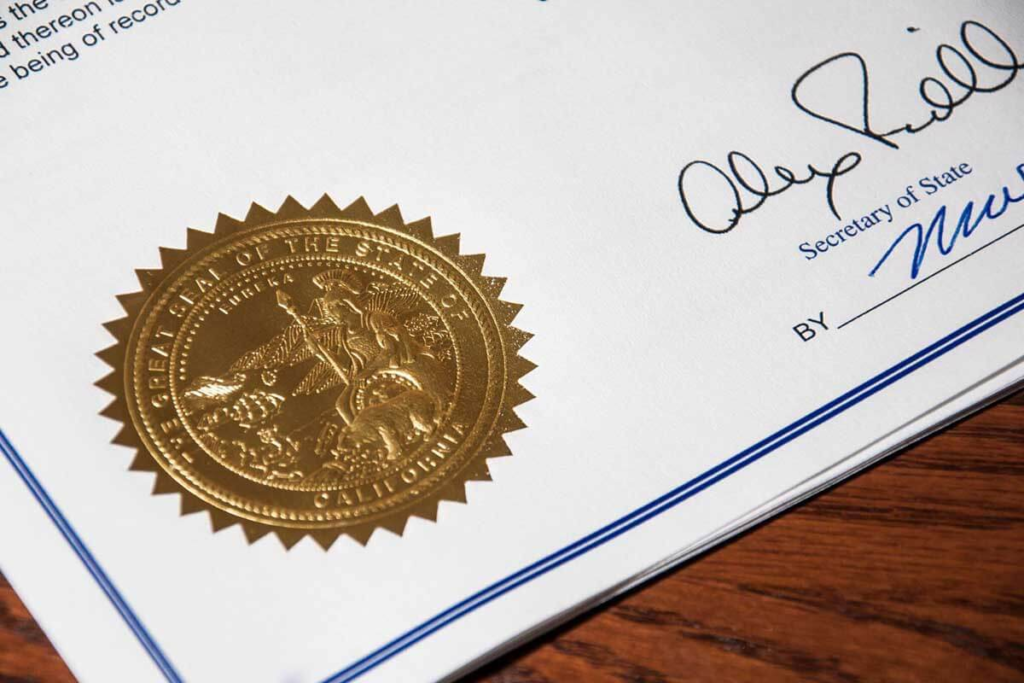
This distinction trips up a lot of people, and it matters in the visa context.
Notarization is the act performed by a notary public: verifying identity, witnessing a signature, and applying a seal. It confirms who signed a document and that the signature is genuine.
An apostille is a separate certification issued by a government authority – in Florida’s case, the Secretary of State’s office – that authenticates the notary’s own credentials for use in countries that are members of the Hague Apostille Convention.
If the country your document is going to requires an apostille, the notarization happens first, then the apostille is obtained as a second step.
For visa applications specifically, some consulates require apostille authentication in addition to notarization. Others accept notarization alone. The instructions from the receiving consulate will specify which one is needed – don’t be afraid to ask questions!
This is what a notary cannot do for your visa application…
This is worth stating clearly, because misunderstandings here can create real problems.
A notary public cannot translate documents. If a supporting document needs to be in a foreign language, a certified translator handles that separately. Depending on the consulate’s requirements, the translated version may itself need to be notarized afterward.
A notary also cannot advise you on which documents to submit, whether your application is likely to succeed, or how to structure your case. That falls within the scope of an immigration attorney, not a notary. If you’re unsure what your application requires, the right resource is the consulate’s official instructions or a qualified immigration professional.
The convenience of mobile notarization for visa documents

Visa applications often come with tight deadlines. Appointment windows at consulates fill up quickly, and missing a submission date can mean starting the process over.
A mobile notary removes one logistical obstacle from that equation. Rather than adding a trip to a notary’s office to an already full schedule, a mobile notary comes to you, at home, at your workplace, or wherever is practical.
For families coordinating multiple documents or applicants, a single mobile notary visit can handle everything at once.
For documents that also require an apostille after notarization, it’s worth flagging this to your notary when you book so the signing is completed in the correct sequence – and the document is ready to go straight to the Secretary of State’s office afterward.
Frequently asked questions: notary for visa application
Does a notary need to understand the language in which the document is written? No. A notary is not certifying the content of the document, just the identity of the signer and the authenticity of the signature. A document in a foreign language can be notarized without the notary reading it.
Can a notary certify a copy of a passport for a visa application? Yes! In Florida, commissioned notaries are legally authorized to make and attest to copies of US passports, driver’s licenses, and diplomas.
However, Florida notaries are strictly prohibited from certifying “vital records” or public documents like birth, death, or marriage certificates. For those, you must request an official certified copy from the government agency that holds the original record.
Always double-check whether your target consulate requires a notary-attested copy or an official government-issued original.
How far in advance should I get my documents notarized? As early as your application timeline allows. If an apostille is also required, factor in additional processing time through the Florida Secretary of State’s office. Cutting it close on a visa deadline with unnotarized documents is a situation worth avoiding.

Notarize your documents with Mobile Notary Orlando
Getting the supporting documents right is one of the parts of a visa application that applicants can actually control. Notarization is a small but specific step in that process, and handling it correctly from the start means one less thing to fix later.
If you need a notary for visa application documents in Central Florida, Mobile Notary Orlando can come to you anywhere in Orange, Seminole, Brevard, and Osceola counties.
Whether you’re working against a consulate deadline or simply want to get this part handled without adding another errand to your day, we’re ready when you are.
Reach out to our team and let’s make it straightforward right away!